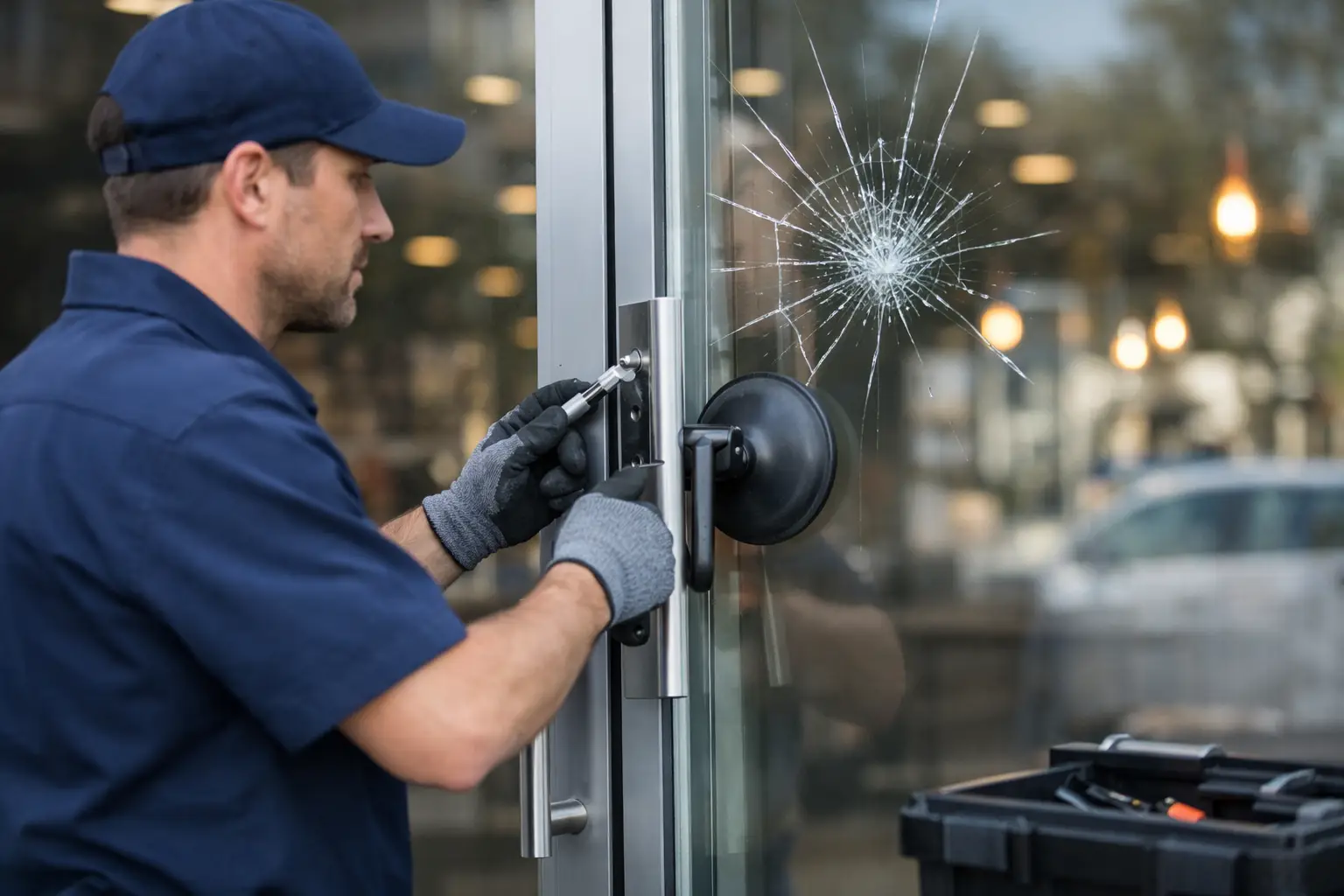
A damaged front entrance changes everything in a matter of seconds. One cracked panel, shattered door lite, bent closer, or broken pivot can leave your business exposed to theft, weather, liability, and lost revenue. That is why storefront glass door repair is never just about glass. It is about securing the property, protecting people, and getting your entrance working again without unnecessary delay.
For store owners, property managers, and landlords, the first question is usually simple: can this be repaired today, or does it need to be boarded up and replaced? The answer depends on the type of damage, the door system, and whether the opening is still safe to use. In many cases, the right contractor can stabilize the site immediately, clean up hazardous debris, take exact measurements, and set up the permanent repair without dragging the problem out for days.
When storefront glass door repair becomes urgent
Some door problems look minor until they become a major security issue. A hairline crack in tempered glass can spread fast. A door that no longer closes tightly may leave the lock misaligned. A damaged aluminum frame can put pressure on the glass and create a much bigger failure later that same day.
Urgent repair is usually needed when the entrance cannot lock properly, the glass has shattered or become unsafe, the frame has been hit, or customers and employees are at risk around the opening. Break-ins, attempted forced entry, vandalism, delivery accidents, and storm debris are common causes. So is wear over time. Hinges, pivots, closers, panic hardware, and bottom rails can all fail, especially on high-traffic commercial doors.
A lot of owners wait too long because the opening still sort of works. That is a mistake. A storefront entrance takes daily abuse. If the glass is compromised or the hardware is failing, the door can stop operating with no warning.
Repair, board-up, or replacement?
This is where experience matters. Not every damaged entrance needs full replacement, but not every broken door should be forced through a patch job either.
If the glass is broken and the opening is exposed, emergency board-up is often the safest first step. It secures the property right away, keeps weather out, and prevents further access while the replacement glass is ordered or prepared. If the frame and hardware are still sound, the permanent fix may only require new glass and adjustments.
If the glass is intact but the door drags, will not latch, or has impact damage at the frame, repair may involve more than the panel itself. A proper service call checks the entire system – glass, rails, pivots, closer, lock, threshold, and alignment. Replacing only the visible broken part can leave the door unsafe or hard to operate.
Full replacement usually makes sense when the frame is twisted, the stile is badly damaged, the glass size or type is no longer practical to match on a rushed timeline, or repeated repairs have already added up. It also depends on building use. A retail entrance with heavy daily traffic has different demands than a low-use office suite.
What a proper emergency response should look like
When your storefront is damaged, you do not need a vague appointment window or a call center reading from a script. You need a contractor who understands emergency securing and commercial door systems.
A proper response starts with immediate site protection. That means clearing dangerous broken glass, isolating the area, and securing the opening so customers, tenants, and staff are not walking into a hazard. If the glass cannot be replaced on the spot, the opening should be boarded up correctly, not covered with a weak temporary patch.
Next comes diagnosis. An experienced technician checks whether the impact damaged more than the glass. That includes the door alignment, top and bottom pivots, closer tension, lockset, frame condition, and whether the surrounding storefront framing shifted. Precise measurements are then taken for replacement fabrication if needed.
The final step is restoring function. A storefront entrance should open smoothly, close fully, and lock correctly. That sounds basic, but rushed repairs often miss this. A door that sticks, slams, or sits out of square creates another service call and another risk.
Common storefront door problems that are not just glass issues
A lot of calls for storefront glass door repair begin with a customer saying, “The glass broke,” when the real problem started in the hardware. Misalignment puts stress on the panel. A failing closer can cause repeated impact. Loose rails can shift and rattle the glass in the frame. Bottom pivots and thresholds wear out over time and throw the whole door off.
That is why a serious repair should never treat the glass as an isolated part. Commercial entrances work as systems. If one part fails, another usually pays for it.
This matters even more after a break-in. Forced entry can damage locks, rails, panic devices, and the surrounding frame all at once. Replacing glass without correcting the structural or mechanical damage leaves the storefront vulnerable.
Why speed matters for business owners
When a storefront entrance is down, the cost starts immediately. There is the obvious security issue, but there is also lost foot traffic, employee disruption, tenant complaints, and the impression your building gives customers. A boarded opening may be necessary, but no owner wants it to stay that way longer than needed.
Fast service reduces the window of exposure. It also helps preserve what can still be repaired. If broken glass sits in a damaged frame, or if a door is forced open and shut after impact, the repair scope can grow. Acting quickly often saves money compared with waiting until the entire system fails.
For retail operators, restaurants, offices, and mixed-use properties, there is another factor: liability. Broken glass and unstable entry doors are dangerous. If someone gets hurt, what started as a repair issue becomes much bigger.
Choosing the right contractor for storefront glass door repair
This is not a handyman job. Commercial glass doors require the right tools, the right materials, and the judgment to know whether a repair is safe. Look for a licensed and insured contractor with real emergency experience, not just general glass installation experience.
You also want direct communication. In urgent situations, delays usually happen when the person answering the phone is not the person who understands the work. Speaking with a knowledgeable expert from the start speeds up decision-making and avoids confusion about what is needed on site.
Local coverage matters too. In Ventura County, Los Angeles County, and the San Fernando Valley, response time can make the difference between a controlled repair and a long night with an exposed property. That is one reason Emergency Glass Repair & Board Up Services focuses so heavily on rapid arrival, on-site securing, and follow-through from temporary protection to permanent restoration.
What to do while waiting for help
Keep people away from the damaged area and do not try to operate a compromised door. If possible, isolate the entrance and direct foot traffic elsewhere. Do not sweep broken glass into a pile and leave it near the opening. And do not tape over shattered safety glass and assume the area is secure.
If there has been a break-in, preserve the scene as much as practical after immediate safety steps. If weather is entering the property, move inventory, electronics, and valuables away from the opening. The goal is simple: reduce risk until trained help arrives.
Storefront glass door repair should restore confidence, not just the opening
A commercial entrance is one of the hardest-working parts of your property. It handles traffic, weather, impact, and daily wear while also representing your business to every customer who walks in. When it breaks, the repair has to do more than fill the gap. It has to return security, function, and a professional appearance.
The right response is fast, controlled, and complete. Secure the site first. Fix the real cause, not just the visible damage. And make sure the finished door operates the way a storefront door should – safely, smoothly, and ready for business. If your entrance has been damaged, treat it like the urgent property issue it is, because waiting rarely makes a storefront problem smaller.