A broken window changes the situation immediately. One impact, one break-in, or one hard wind gust can leave your home, storefront, or rental exposed to injury, theft, weather, and liability. If you are trying to figure out how to secure broken window damage fast, the goal is simple – protect people first, stabilize the opening, and keep the property from getting worse.
That sounds straightforward, but the right response depends on what actually broke. A small crack in a bedroom window is not the same as a smashed storefront panel. A shattered patio door brings different risks than a second-story window with a hole through the glass. In an emergency, speed matters, but so does doing the right temporary fix for the situation in front of you.
How to secure broken window without making it worse
The first priority is safety. Keep people away from the broken area, especially children, customers, tenants, and pets. Broken glass travels farther than most people expect, and loose shards around the frame can keep falling long after the initial damage.
If the window was broken during a break-in or suspected crime, do not start cleaning everything up right away. Call law enforcement first if needed, preserve the scene as much as possible, and then move to securing the opening once you have clearance. Property protection matters, but so does documentation.
If weather is coming in, act quickly. Rain, wind, and even overnight moisture can turn a glass problem into drywall damage, flooring damage, inventory loss, and electrical risk. For businesses, an exposed opening can also mean a security failure that affects merchandise, equipment, and access control.
Before touching anything, put on heavy gloves, closed-toe shoes, and eye protection. If there are large shards still hanging in the frame, do not stand directly under or in front of them while deciding what to do next.
Start with the type of window damage
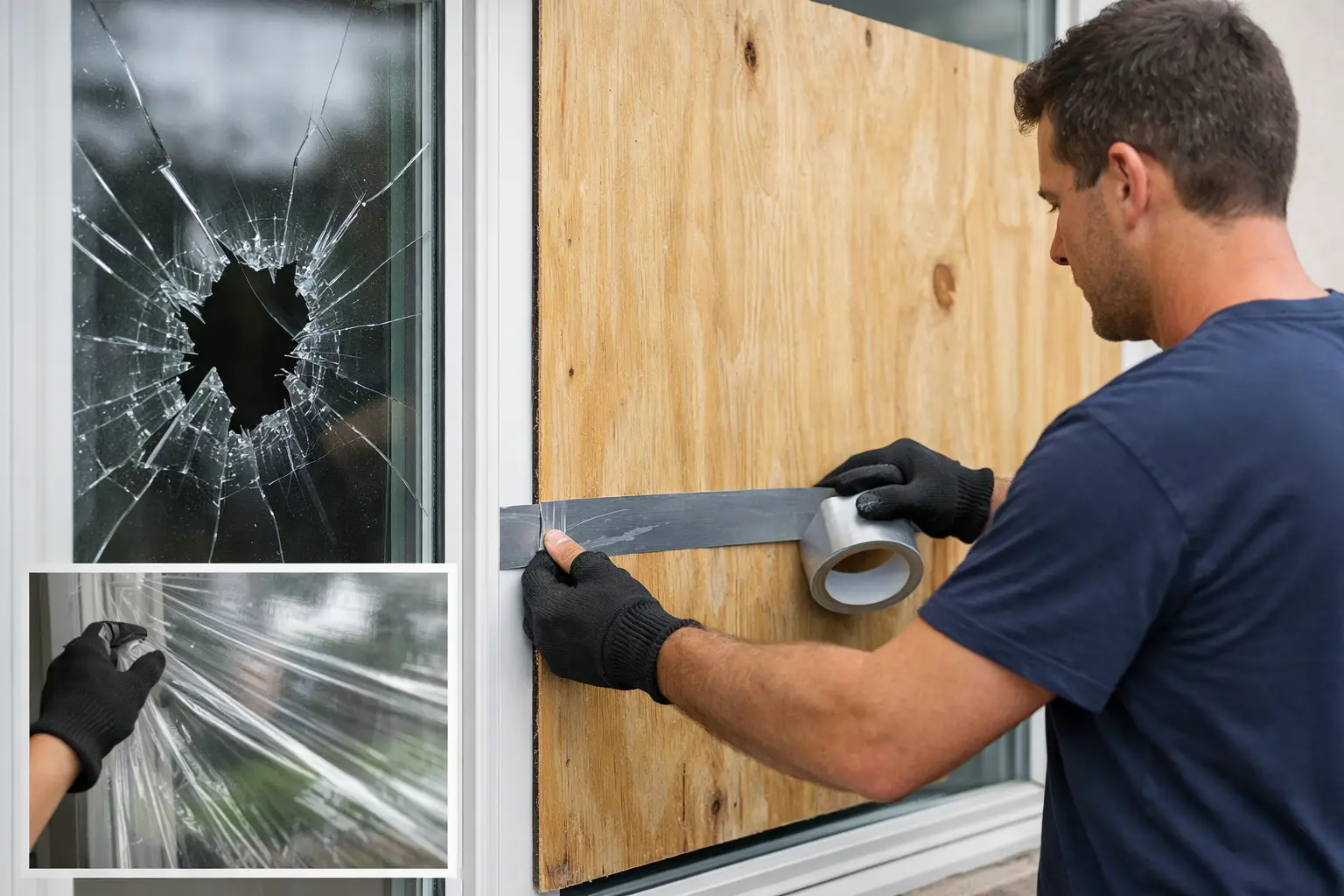
Not every broken window needs the same temporary protection. If the glass is cracked but still mostly intact, heavy-duty tape can help hold the pane together temporarily and reduce further collapse. This is only a short-term measure. It does not restore security, and it should never be treated as a repair.
If the pane is shattered or missing sections, the opening needs to be covered. For very small holes, thick plastic sheeting may help block wind and water for a short time, especially if you are waiting on immediate service. But plastic does not provide real security. It tears, flexes, and fails fast in higher wind or public-facing locations.
If the window is accessible from ground level, attached to a door, facing a sidewalk, or part of a storefront, boarding it up is usually the safer temporary choice. A properly installed board-up gives the opening structure, helps prevent entry, and reduces the risk of remaining glass shifting out of the frame.
There is a trade-off here. A quick DIY cover may stop light rain for a few hours, but it can also create new problems if it is attached poorly, traps sharp glass in place, or leaves the frame under stress. In commercial settings, bad temporary work can also create code, appearance, and liability issues.
When plastic covering is enough
Plastic sheeting makes sense when the damage is limited, the opening is not easy to access, and the main concern is temporary weather protection. It can also help overnight if replacement is already scheduled for the next morning. The plastic should be pulled tight and secured to a stable part of the frame, not just taped across jagged glass.
Still, plastic is a stopgap. It is not the answer for break-in damage, high-traffic properties, or larger openings.
When board-up is the right move
Board-up is the better option when security is compromised, the glass is mostly gone, the frame is unstable, or the property will be unattended. This is especially true for storefronts, vacant units, rental properties between tenants, and homes with accessible side or rear windows.
A solid board-up should cover the full opening, sit securely against the frame, and be installed in a way that stabilizes rather than splits the surrounding material. Done correctly, it buys time for precise measuring, glass ordering, and permanent replacement.
What to do right away after the glass breaks
Once the area is cleared, remove loose glass from the floor and nearby surfaces carefully. Use a broom and dustpan for larger pieces, then vacuum smaller fragments if the surface allows it. Check window tracks, rugs, furniture, counters, and entry mats. In a business, glass can spread into customer paths, stock rooms, and checkout areas.
Do not rip out every piece of glass still attached to the frame unless it is actively falling. Some pieces are safer left in place until a professional can remove them in a controlled way. Forcing them out can send sharp shards inward or outward and damage the sash, frame, or glazing channel.
Next, protect the interior. Move furniture, electronics, merchandise, and anything water-sensitive away from the opening. If there is active weather exposure, use towels or tarps inside while the opening is being secured. This is especially important for hardwood floors, inventory displays, and wall finishes near the break.
Then document the damage. Take clear photos of the window, surrounding frame, glass debris, and any signs of impact or forced entry. For homeowners, this helps with insurance. For landlords and commercial owners, it also helps with incident records, tenant communication, and replacement planning.
How to secure broken window openings at a business
Commercial properties need a tighter response. A broken storefront window is not just a repair issue – it is a safety problem, a security problem, and often a business continuity problem. If customers or employees use the area, isolate it immediately and prevent foot traffic near the damaged glass.
If the opening faces a public sidewalk or parking area, securing it fast matters even more. You may be dealing with after-hours exposure, merchandise visibility, weather, and the risk of someone getting hurt on or near your property. In many cases, a professional emergency board-up is the right first step because it stabilizes the site and allows permanent glass replacement to be measured correctly.
For offices, retail spaces, restaurants, and managed properties, speed is not the only factor. The opening has to be secured cleanly and professionally. Sloppy temporary work sends the wrong message to customers, tenants, and neighboring businesses. More importantly, it can fail when pressure or impact hits the board later.
When not to handle it yourself
Some broken windows should not be a DIY project at all. Large glass panels, tempered glass doors, insulated glass units, upper-floor windows, and commercial storefront systems require more than basic cleanup and covering. The same goes for damaged frames, bent door rails, or openings affected by forced entry.
If the frame itself is compromised, securing the glass alone will not solve the problem. You may need stabilization of the surrounding structure before replacement can happen. And if there is any chance the opening affects alarm contacts, fire egress, or access control hardware, the job needs experienced handling.
This is where a true emergency glass contractor matters. You want licensed experts who can board up the property, remove hazards, measure accurately, and return for the permanent repair without losing time between trades. That is the difference between a temporary patch and a controlled recovery.
The safest path to permanent repair
Temporary security is only step one. The real fix is proper glass replacement matched to the window or door system. That includes the right glass type, correct dimensions, safe installation, and a clean finish that restores both security and appearance.
For homes, that may mean matching insulated units, patio door glass, or custom-cut panes. For commercial properties, it may involve storefront glass, door closers, aluminum framing, or specialty panels. The best emergency response teams do both parts of the job – immediate protection now and full restoration after fabrication.
If you are in Ventura County, Los Angeles County, or the San Fernando Valley, working with a local emergency team makes a real difference. Response time matters when the property is open to weather or unauthorized entry. So does speaking directly with licensed professionals who know how to secure the opening first and finish the repair correctly.
A broken window does not leave much room for delay. Protect people, control the hazard, and secure the opening the right way so the damage stops where it started.