A broken storefront at 2:15 a.m. is not just a repair issue. For a property manager, it is a liability issue, a tenant issue, a security issue, and by sunrise, often a reputation issue. That is exactly where property management board up services matter most – when a building is exposed, people are at risk, and waiting until regular business hours is not a real option.
When glass shatters, a door is forced open, or storm damage leaves an opening in the structure, the first job is not cosmetic. The first job is control. A professional board-up team secures the opening, removes dangerous broken glass, stabilizes the area, and helps prevent the next problem from starting. That next problem might be theft, weather intrusion, trespassing, or another injury claim.
Why property management board up services are different
Property managers are rarely dealing with one simple window repair. They are protecting occupied apartment buildings, vacant units, retail centers, office suites, mixed-use properties, and common areas where one damaged opening can affect multiple tenants. The response has to be fast, but it also has to be organized.
That is the difference between general handyman work and true emergency board-up service. A property manager needs a contractor who understands access issues, after-hours communication, tenant safety, incident documentation, and what it takes to move from temporary protection to permanent repair without wasting time.
In practical terms, that means showing up ready to secure storefront glass, entry doors, side windows, leasing office glass, patio door openings, and vandalized common area panels. It also means knowing when a board-up is enough for the night and when the damage points to a larger structural or glazing issue that needs immediate follow-up.
What a fast board-up response actually protects
A lot can go wrong between the moment glass breaks and the moment the opening is secured. Property management board up services are designed to close that gap.
The most obvious concern is unauthorized entry. A broken window or door advertises opportunity. Vacant units, retail spaces after hours, and partially occupied buildings are especially vulnerable. Once one intrusion happens, repeat incidents become more likely if the property looks easy to access.
Weather is the next threat. Even a small opening can let in wind-driven rain, debris, and dirt that turn a glass loss into flooring damage, drywall damage, and electrical risk. In Southern California, people sometimes underestimate weather exposure, but one night of rain through an open storefront or apartment window can create a much larger restoration bill.
There is also the immediate hazard of shattered glass. Tenants, employees, maintenance staff, customers, and emergency responders all move through these spaces. Loose glass at entrances or common walkways is not a detail to handle later. It has to be cleaned and controlled right away.
Then there is business interruption. For commercial properties, an unsecured opening can keep a tenant from opening on time or force an early shutdown. For multifamily properties, it can make a unit uninhabitable or create understandable complaints from residents who no longer feel safe. Fast board-up work helps stop the damage from spreading into lease problems, lost revenue, and ongoing management headaches.
When property managers should call immediately
Some calls are obvious. A break-in, smashed storefront, or storm-damaged glass needs immediate attention. But many property managers wait too long on situations that are already emergency conditions.
If a door no longer locks after impact, that is an emergency. If tempered glass has exploded out of a sidelight or lobby entrance, that is an emergency. If a vacant unit has a broken sliding glass door, that is an emergency. If a tenant reports vandalism to common area glass, laundry room doors, or pool gate enclosures, that is an emergency too.
The rule is simple. If the opening affects security, safety, or weather protection, it should be boarded up now, not added to tomorrow’s task list.
What to expect from a professional board-up crew
A real emergency response should feel controlled from the first call. Property managers do not need a vague arrival window or a middleman who cannot answer technical questions. They need direct communication with someone who understands glass systems, openings, hardware, and site protection.
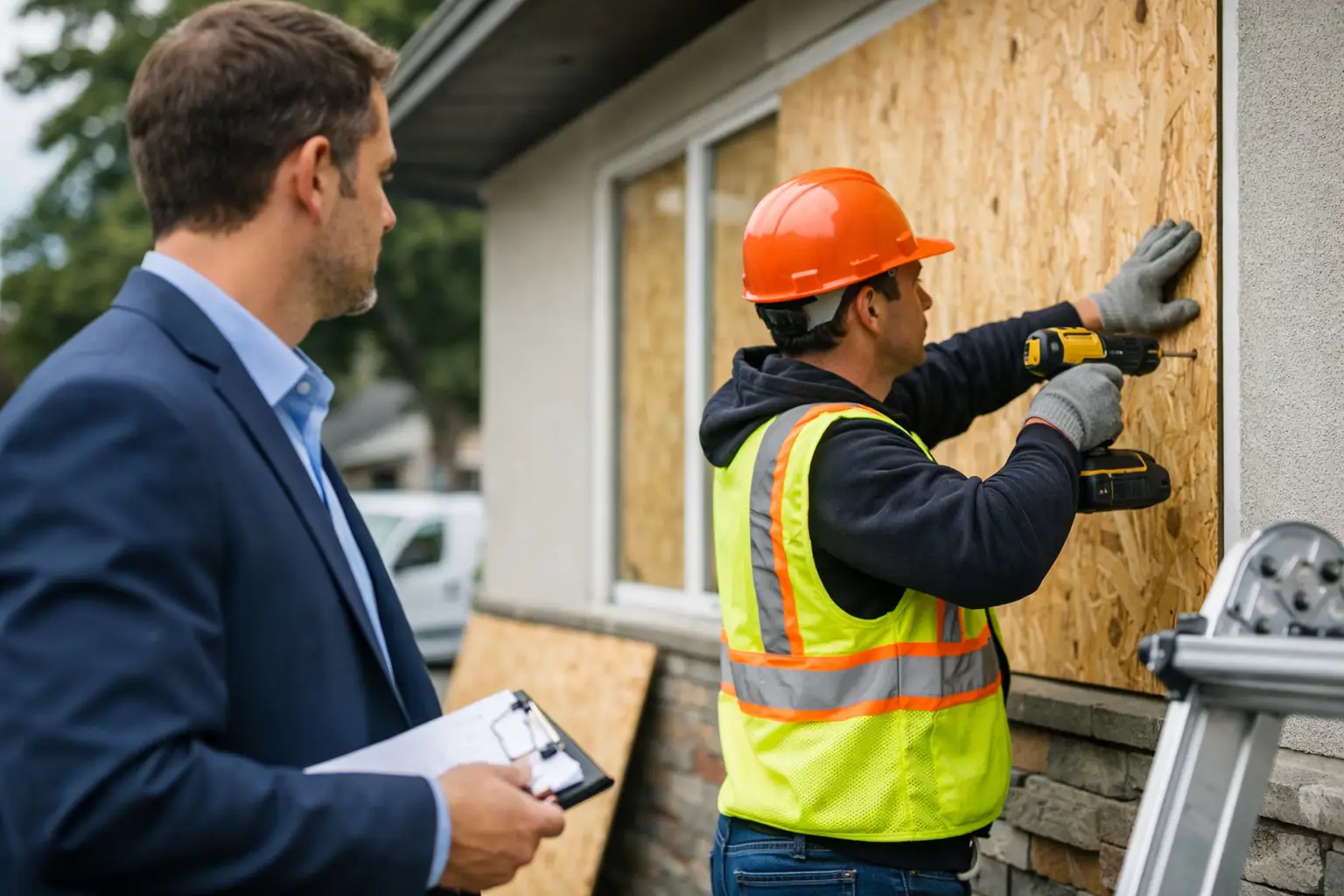
On arrival, the crew should assess the damage, isolate the hazard, remove broken glass where needed, and secure the opening with materials suited to the situation. A storefront opening may require a different approach than a residential window, and a damaged door system may need temporary stabilization beyond simply covering the glass area.
Good board-up work is not random plywood nailed over a problem. It should be measured, anchored correctly, and installed to help resist forced entry and weather exposure until replacement materials are ready. If the frame, lock area, or surrounding structure is damaged, that should be identified immediately so the temporary protection accounts for the full problem.
The best contractors also document what they see. That helps property managers communicate with owners, tenants, and insurance carriers without chasing down details later.
Board-up is temporary, but it should set up the permanent fix
This is where experience matters. A rushed board-up that ignores measurements, hardware condition, or frame damage often creates delays later. The opening gets secured for the night, but the permanent repair stalls because the right information was never collected.
A stronger approach is to secure the property and prepare for replacement in the same visit. That means taking precise measurements, identifying the glass type, noting tint or safety requirements, and evaluating whether the issue is limited to the glass or extends to rails, closers, pivots, locks, or surrounding components.
For property managers, that saves time. You are not hiring one company to cover the opening and then starting over with another company that has to re-inspect everything from scratch. The handoff from emergency service to restoration should be clean and quick.
Commercial and residential properties have different pressures
In retail and office settings, the pressure is visibility. A broken storefront tells every passerby that the property is exposed. Board-up work needs to be secure, but it also needs to look controlled and professional enough to support the tenant’s operation until replacement glass is installed.
In multifamily properties, the pressure is habitability and resident trust. Tenants want to know their home is safe tonight, not next week. If a unit entry, bedroom window, or sliding glass door is compromised, speed matters as much as workmanship.
Vacant properties carry another kind of risk. Once a building looks unsecured, it can attract repeat trespassing, vandalism, and dumping. In those cases, prompt board-up service does more than react to damage. It helps break the cycle before the property becomes a recurring problem.
Local response matters more than most managers realize
Emergency work is one of the few service categories where proximity changes the outcome. A contractor who knows Ventura County, Los Angeles County, and the San Fernando Valley can often respond faster, navigate access points better, and understand the property mix in the area.
That local advantage is not just about drive time. It also means familiarity with common storefront systems, apartment layouts, older residential window configurations, and the urgency that comes with managing properties in dense, high-traffic neighborhoods. When you are responsible for protecting buildings and people, local response is operational value, not just a nice extra.
This is also why many managers prefer working with a family-operated emergency contractor rather than a call-center dispatch model. You get direct answers, faster decision-making, and a crew that treats the site like an active risk situation, not just another work order.
Choosing the right provider for property management board up services
Not every company advertising emergency help is built for property management. Some can board up an opening, but they are not equipped to handle the follow-through. Others may be available after hours but cannot provide the skilled glass repair and replacement work that comes next.
The right provider should be licensed, insured, and ready 24/7. They should have experience with both commercial and residential openings, understand cleanup and safety procedures, and be able to move from emergency board-up to final repair without delays. Response time matters, but so does judgment. A fast crew that secures the wrong area or misses hidden damage can cost more time later.
Emergency Glass Repair & Board Up Services is built around that full-response approach – secure the property fast, clean the hazard, measure accurately, and move the job toward proper restoration.
For property managers, the real value of emergency board-up work is not the sheet of plywood. It is the immediate return of control. When the site is secured quickly and handled by people who know what they are doing, you can focus on tenants, owners, and next steps instead of worrying about what might happen before morning.