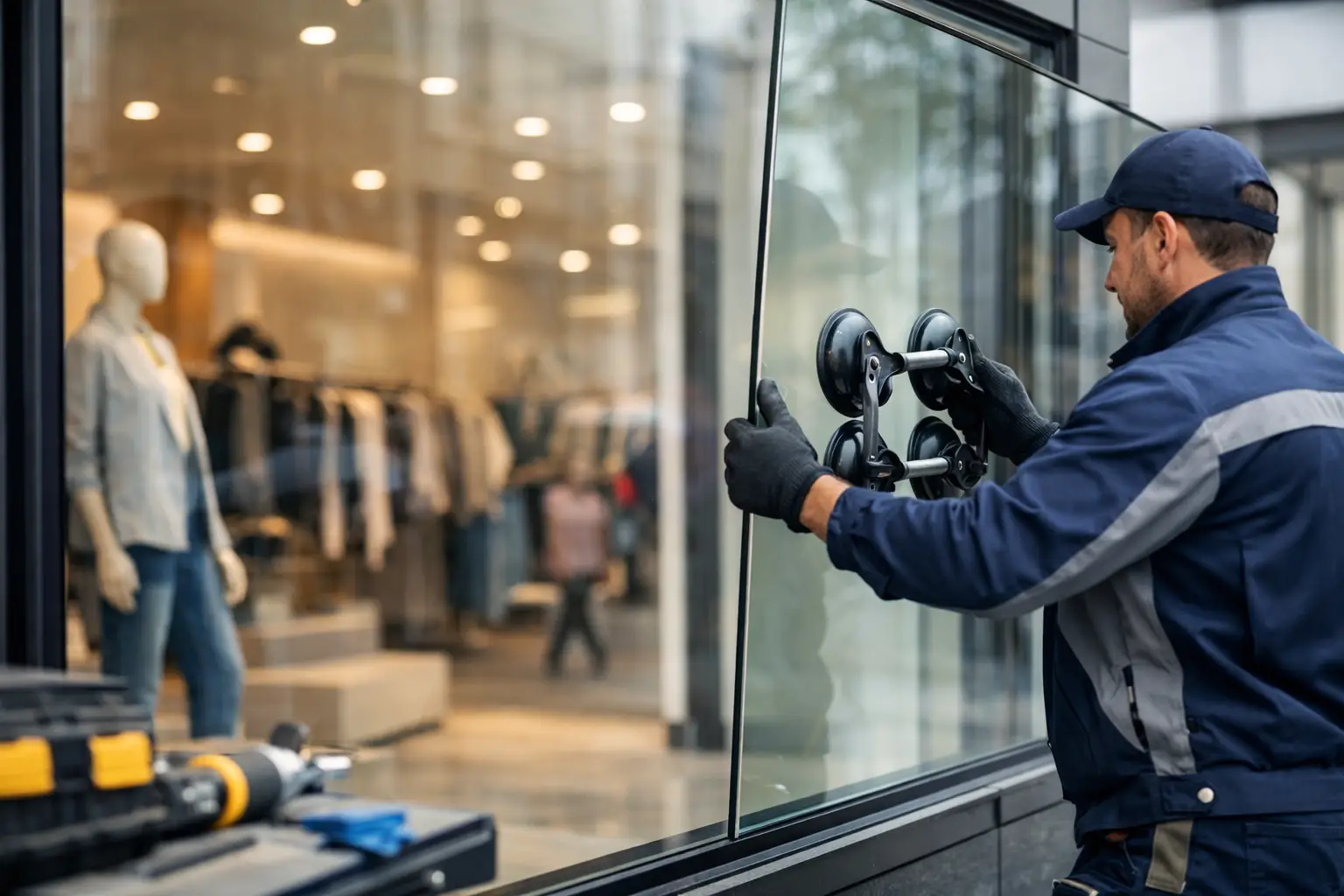
A shattered storefront changes everything in seconds. Customers hesitate at the door, employees feel exposed, inventory is at risk, and every minute the opening stays unprotected can cost you money. Retail store glass replacement is not just about putting a new pane in place. It is about securing the property fast, cleaning up a hazard, and getting your business back to a professional, open-for-business condition.
When retail glass fails, the first priority is control. That means securing the opening, removing dangerous debris, and making sure no one gets hurt walking through broken glass. After that, the real work begins – accurate measurement, matching the right glass, and restoring the storefront system so the repair does not look patched together or perform poorly a week later.
Why retail store glass replacement needs fast action
A broken retail window or door panel creates more than an eyesore. It creates liability, exposure, and interruption. In a shopping center or street-facing location, broken glass signals vulnerability. That can invite theft, weather intrusion, and more damage before morning.
For store owners and property managers, speed matters because the costs stack up quickly. A delayed response can mean wet flooring after rain, damaged displays, air loss from the building, and lost foot traffic from customers who assume the store is closed or unsafe. If the damage happened during a break-in, the urgency is even higher because the opening may still be unsecured.
That is why the job usually starts with emergency board-up service before the permanent replacement is installed. Board-up is not the final answer, but it buys time and protects the property while the replacement glass is measured, ordered, and prepared.
What causes storefront glass to fail
Some retail glass breaks in dramatic ways, and some fails after years of wear. Forced entry is one of the most common reasons a store suddenly needs glass replacement. Thrown objects, smash-and-grab attempts, and damaged door closers can all take out a panel or entry door glass.
Accidental impact is another frequent cause. Shopping carts, delivery hand trucks, maintenance equipment, and even a customer pushing too hard on a compromised door can crack or shatter glass that was already stressed. Storm damage also plays a role, especially when wind sends debris into front glass or weak framing allows movement that the pane cannot handle.
Then there is age. Not every replacement is an emergency, but older storefront systems can develop issues that lead to cracks, seal problems, clouding, or poor fit in the frame. In those cases, replacement may be planned instead of urgent, but it still needs to be done with the same precision.
Retail store glass replacement is more than swapping glass
A lot of property owners assume the fix is simple. Remove the broken piece, set in another, and move on. In reality, storefront systems are built components. The aluminum framing, door hardware, glazing channels, setting blocks, and glass thickness all need to work together.
If measurements are off, the replacement may rattle, bind, leak air, or place stress on the frame. If the wrong type of glass is used, you can run into safety issues, code problems, or a mismatched appearance that hurts the look of the storefront. Tempered safety glass is often required in doors and many high-traffic locations, and replacement has to account for that from the start.
This is also why temporary fixes can create bigger problems. A poorly secured opening or improvised panel may keep some weather out, but it does not restore security or appearance. For a retailer, appearance matters. Customers notice cracked edges, uneven tint, poor alignment, and taped-up sections right away.
The right process for retail store glass replacement
The best storefront repairs follow a controlled sequence. First comes emergency response. The area is made safe, broken glass is cleaned up, and the property is secured. If a same-day permanent replacement is not possible, the opening is boarded up correctly so the store is protected without causing unnecessary damage to the frame.
Next comes field measurement and glass identification. This step matters more than most people realize. The contractor needs to confirm dimensions, thickness, tint, safety requirements, and how the glass sits in the storefront assembly. If it is a door lite, the hardware and alignment may need inspection too.
Fabrication and installation come after that. Once the correct glass is ready, the installer removes the temporary protection, prepares the frame, installs the new glass, and checks for fit, stability, and finish. On a proper job, the result looks clean, operates correctly, and restores the storefront to a professional standard.
When replacement is better than repair
Sometimes retail glass can be stabilized, but many situations call for full replacement. If the glass is shattered, deeply cracked, or compromised at the edges, replacement is usually the safer path. Once safety glass has failed, trying to preserve it is rarely worth the risk.
There are also cases where the surrounding system influences the decision. If the frame is bent, the glazing material is deteriorated, or the door is no longer hanging properly, replacing the glass alone may not solve the problem. A good contractor will tell you when the issue is only the pane and when the storefront system itself needs correction.
That honesty matters. The cheapest short-term option is not always the lowest-cost outcome. A rushed install using the wrong glass or ignoring frame issues can lead to repeat service calls, premature failure, and more downtime.
Choosing a contractor for storefront glass emergencies
If your store is exposed after hours, you do not need a call center reading from a script. You need someone who can take charge, explain the next step clearly, and get to the site fast. That is especially true in Ventura County, Los Angeles County, and the San Fernando Valley, where store owners often need immediate help late at night, early in the morning, or during active business hours.
Look for a contractor that handles both emergency board-up and permanent replacement. That matters because the company securing your store should also understand how the final restoration needs to be measured and installed. It saves time, reduces confusion, and helps prevent the handoff problems that happen when one company does the emergency work and another tries to piece together the replacement later.
Experience counts too. Retail environments are different from residential windows. Storefront systems deal with heavier traffic, stricter safety demands, and much higher visibility. A contractor with real commercial glass experience will know how to protect the site, work around operating hours when possible, and restore the storefront without making it look like an afterthought.
How to reduce downtime during the replacement
There is no way around the fact that broken storefront glass disrupts business. The goal is to limit that disruption. Fast board-up service keeps the property secure right away. Accurate measurements prevent reorder delays. Clear communication helps owners and managers plan around installation timing.
Some replacements can be scheduled to reduce impact on customers, especially when the opening is already secured and the permanent glass is ready. In other cases, the damage is severe enough that immediate action takes priority over convenience. It depends on the extent of the break, the type of opening, and whether the store can operate safely while waiting.
This is where a local emergency glass contractor has a major advantage. A team built for urgent response understands that your problem is not abstract. It is a storefront, a tenant, a lease obligation, a payroll shift, and a business that needs protection now.
What store owners should do immediately after breakage
First, keep people away from the damaged area. Broken storefront glass leaves sharp fragments that can spread farther than expected. Second, avoid trying to force damaged doors open or closed, since that can worsen the break or damage the frame. Third, call a licensed glass professional who can secure the opening and assess the full scope of the damage.
If the break was caused by forced entry, document what you can safely from a distance and coordinate with law enforcement or property management as needed. After that, the priority is simple – secure, clean, measure, replace. Emergency Glass Repair & Board Up Services is built around that exact response, with direct access to licensed experts who understand what a retail property needs when time is critical.
A broken storefront does not need a long debate or a temporary patch that keeps you guessing. It needs decisive action, proper replacement, and a finished result that protects your business and restores confidence the moment customers walk up.