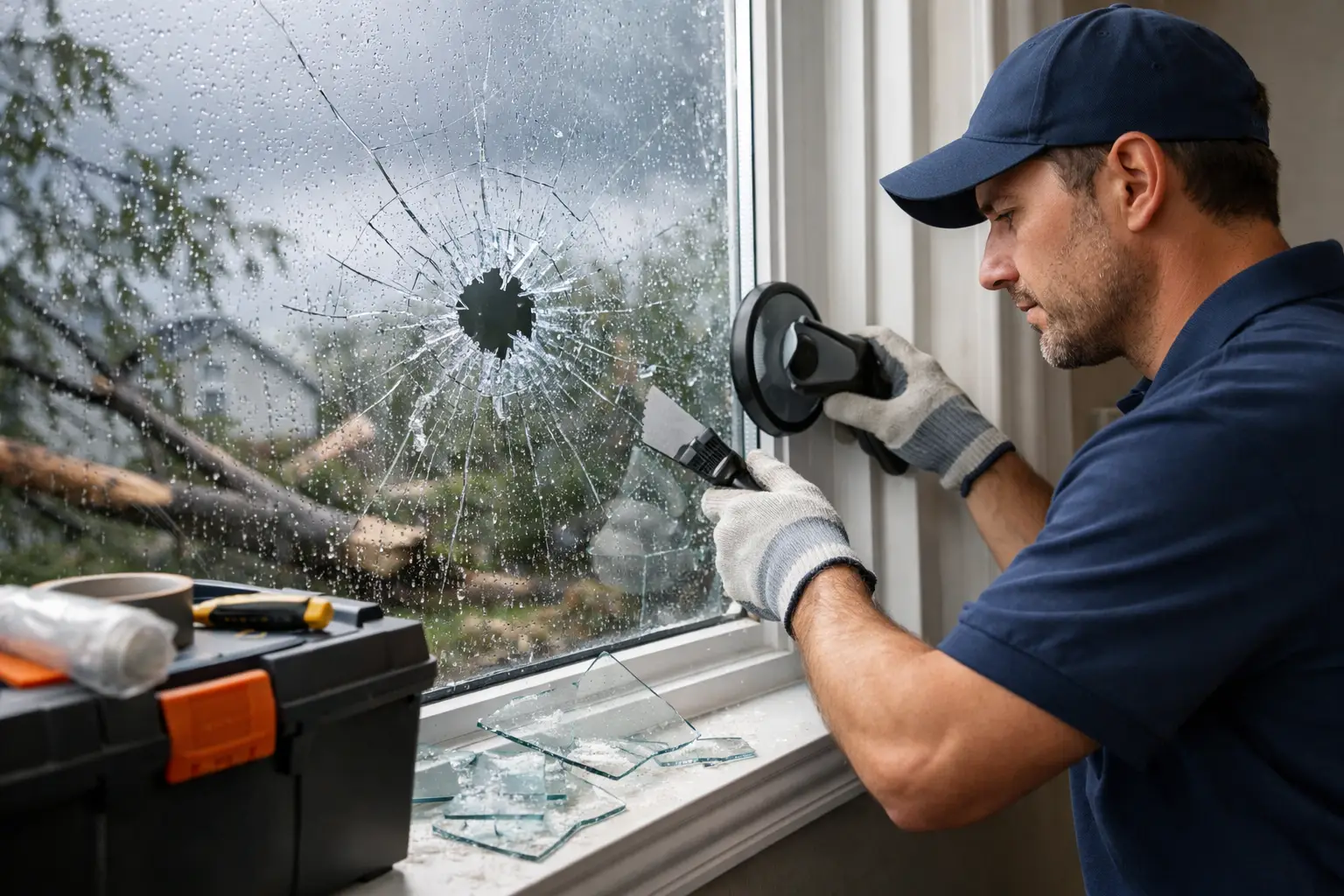
One hard storm is all it takes. A cracked pane, shattered storefront glass, or a window frame pushed loose by wind can leave your property exposed in minutes. Storm damaged window repair is not just about replacing glass – it is about securing the opening fast, clearing hazards safely, and stopping the next round of damage before it starts.
When windows fail during a storm, the risks stack up quickly. Rain gets inside. Wind drives debris deeper into the opening. Broken glass creates an immediate safety problem for family members, customers, employees, or tenants. If the damaged window is at a storefront or ground-level entry point, security becomes a concern right away. That is why the first step is not always replacement. In many cases, the right move is emergency board-up followed by precise measurement and permanent repair once conditions are safe.
What storm damaged window repair usually involves
Not every storm-damaged window fails the same way, and that matters. A small crack from flying debris may allow for scheduled replacement if the unit is still stable and the property can be secured. A fully blown-out pane, on the other hand, needs immediate attention. The same goes for bent frames, damaged storefront door glass, or windows that have shifted enough to stop locking properly.
Storm damaged window repair often starts with an on-site assessment. The goal is to determine whether the glass can be stabilized, whether the frame is still sound, and whether temporary board-up is needed before replacement. In an emergency, speed matters, but so does doing the work in the right order. Rushing straight to replacement without securing the site, cleaning hazardous glass, or checking the surrounding system can lead to bigger problems later.
For residential properties, that may mean protecting bedrooms, living rooms, patio doors, or upper-story windows hit by tree limbs or wind-thrown debris. For commercial properties, it can include storefront systems, office entry glass, display windows, and door closers or hardware affected by impact. A damaged window is rarely just a pane of glass issue. Storms can stress the entire opening.
What to do right after a storm breaks a window
Start with safety. Keep people away from the broken area, especially if tempered or laminated glass has scattered across floors, sidewalks, or entry paths. If water is getting in, move valuables, electronics, and inventory out of the immediate area if you can do it safely.
Next, avoid the common mistake of trying a quick DIY fix. Taping over shattered glass or pressing plastic against a broken opening might seem helpful, but it usually does very little against wind or rain. It can also make cleanup more dangerous. If the frame is unstable or the opening is large, improvised fixes can fail fast.
The better move is to call a licensed emergency glass contractor who can secure the property properly. A professional response should include cleanup of dangerous broken glass, temporary board-up if needed, and measurement for permanent replacement. That immediate protection is what keeps a storm incident from turning into interior water damage, theft exposure, or a prolonged business interruption.
When board-up is the right call
A lot of property owners ask the same question during an emergency – can this be repaired now, or does it need to be boarded first? The honest answer is that it depends on the weather, the size of the opening, the type of glass, and whether the correct replacement material is immediately available.
Board-up is often the best option when the storm is still active, when the opening is too dangerous to work on safely, or when custom glass needs to be fabricated. That is especially true for commercial storefront glass, insulated units, tempered panels, and oversized residential windows. A proper board-up is not a shortcut. It is a protective step that secures the building until the permanent repair can be completed correctly.
For business owners, board-up also protects merchandise, equipment, and customer access points. For homeowners, it helps keep out weather, animals, and unwanted entry while the replacement process moves forward. The key is making sure the temporary protection is installed cleanly and professionally, without causing avoidable frame damage.
Why fast response matters in storm damaged window repair
Storm damage rarely stops with the first break. Once a window is compromised, the opening becomes a path for water intrusion, pressure changes, and further structural stress. In a commercial setting, even a few hours of exposure can affect floors, drywall, displays, and electrical systems near the opening. In a home, furniture, flooring, and personal belongings can be damaged long after the storm passes.
That is why response time matters so much. A fast-arriving emergency crew can stabilize the opening before secondary damage gets worse. They can also spot related issues that property owners may miss under stress, such as damaged glazing stops, weakened frames, misaligned doors, or nearby glass that has been cracked but not yet fully failed.
In urgent situations, you want direct access to experienced people who know how to take control of the site. Not a call center. Not a delayed scheduling window. Real emergency work calls for licensed experts who can assess, secure, and plan the next step on the spot.
Residential and commercial repairs are not the same
There is overlap, but the repair strategy for a home is often different from the repair strategy for a storefront or managed property. Residential windows may involve double-pane insulated units, bedroom egress considerations, patio door glass, or matching existing styles and finishes. Commercial systems often involve safety glazing requirements, thicker glass, aluminum framing, door hardware, and the need to keep public-facing spaces secure and professional.
That difference matters because the right repair is not just about closing the opening. It is about restoring function, appearance, and code-appropriate performance. A homeowner may be focused on weather protection and family safety. A property manager may also need to think about tenant liability, access control, and keeping the building operational. A storefront owner may need the opening secured immediately, then replaced in a way that preserves visibility and curb appeal.
An experienced emergency glass contractor should be able to handle both the crisis phase and the restoration phase without losing momentum in between.
What a professional repair process should look like
A solid storm damage response is straightforward. First, the crew secures the area and removes hazardous broken glass. Then they evaluate the frame, sash, surrounding hardware, and size of the opening. If same-day replacement is possible and safe, the repair may move directly to glass installation. If not, the window is boarded up properly and measured for fabrication.
Once the replacement glass is ready, the permanent repair should restore the window to proper fit, seal, and appearance. That includes making sure the unit closes correctly, locks correctly, and is not left with gaps that invite future leaks or drafts. Good work is not just visible in the glass itself. It shows up in clean edges, stable framing, reliable operation, and a finished result that looks like the damage never happened.
This is also where experience counts. After more than 35 years in emergency response work, Emergency Glass Repair & Board Up Services understands that storm calls are not routine service appointments. People are dealing with pressure, cleanup, insurance questions, and the need to protect a property fast. The job is to bring order to that situation and move it forward without wasted time.
Choosing the right contractor after storm damage
The lowest quote is not always the best decision when a window has been storm-damaged. Emergency work needs judgment, speed, and proper materials. If a contractor cannot secure the property right away, does not handle cleanup, or treats board-up and replacement as two disconnected jobs, the process gets slower and more frustrating than it needs to be.
Look for a company that offers true emergency response, understands both residential and commercial systems, and can handle everything from temporary protection to final replacement. Local coverage matters too. In Ventura County, Los Angeles County, and the San Fernando Valley, fast arrival can make a real difference when a property is open to weather or exposed to the street.
Storm damage creates enough uncertainty on its own. The repair process should not add more. You want licensed professionals who answer directly, show up prepared, and know how to secure the opening first and finish the repair the right way after that.
If your window was hit by wind, debris, or driving rain, act before the damage spreads. The sooner the opening is secured, the better chance you have of protecting the rest of the property and getting back to normal with less disruption.