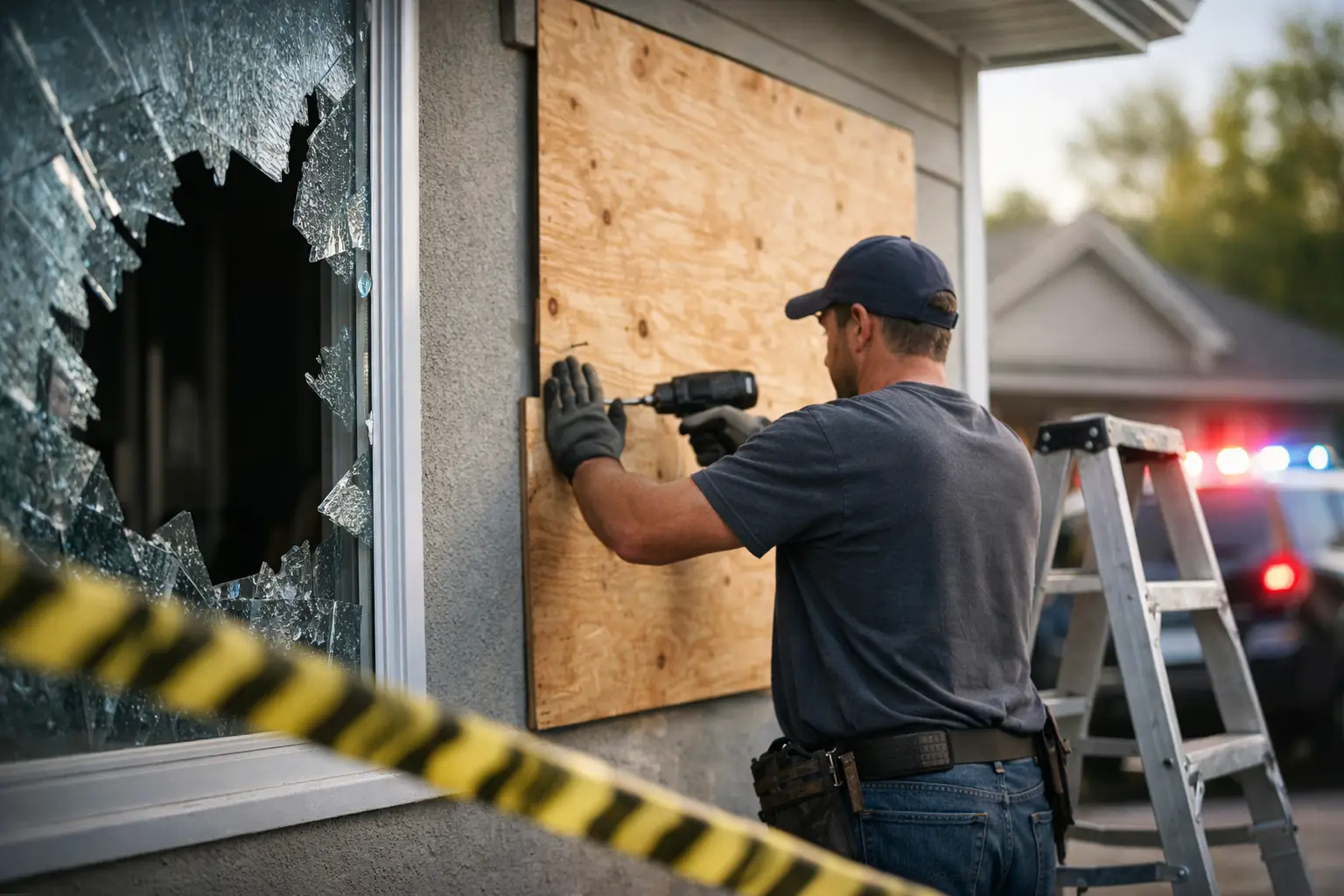
A broken storefront door at 2 a.m. or a smashed house window before sunrise changes the next few hours fast. If you need to board up after break in damage, the priority is simple: secure the opening, remove the hazard, and stop the situation from getting worse.
That sounds straightforward until you are standing in broken glass, dealing with police, worried about weather, and trying to figure out whether the frame, lock, or surrounding glass is also damaged. This is why emergency board-up service matters. It is not just about covering a hole. It is about regaining control of the property right away.
Why a board up after break in matters immediately
After a forced entry, the damage you can see is only part of the problem. A shattered window or busted glass door leaves the property exposed to another theft attempt, water intrusion, wind, pests, and liability from sharp glass left behind. For businesses, there is also the issue of employee safety, customer access, and whether the space can even open the next day.
For homeowners, the risk feels personal fast. A bedroom window, patio door, or side entry with broken glass can make the entire home feel unsafe. For landlords and property managers, the pressure is different but just as urgent. You need the unit secured now, not tomorrow, and you need a contractor who can stabilize the opening and prepare for permanent repair without wasting time.
A proper board-up gives you that first layer of protection. It closes off the exposed area, helps deter repeat entry, and buys time for accurate measuring and full glass replacement. Done correctly, it also protects the surrounding frame from further stress.
What to do first after a break-in
The first move is safety. Do not walk through broken glass without checking the area, and do not touch shattered door panels or cracked window sections that may still be hanging in the frame. If the intruder may still be nearby, call 911 first. If law enforcement needs to document the scene, let them do that before cleanup begins.
Once the scene is cleared, the next step is to secure people and pets away from the damaged area. Broken tempered glass can spread farther than many people expect, and laminated or wired glass can remain partly attached while still being dangerous.
After that, call for emergency board-up service. This is where experience matters. A licensed crew does more than throw plywood over an opening. They assess the damage, clear hazardous debris, identify whether the break affected only the glass or also the frame and hardware, and secure the area in a way that holds until replacement materials are ready.
If you are able, take photos for insurance before work starts. That helps document the point of entry and the extent of the damage. But do not delay securing the property just to get perfect photos. The longer the opening stays exposed, the greater the risk.
How professionals board up after break in damage
There is a big difference between a rushed patch and a professional emergency response. The goal is not appearance. The goal is security, safety, and stability.
A professional crew starts with cleanup. Loose shards, broken glazing, and unstable pieces are removed so nobody gets hurt and the board-up can be installed against a solid surface. Then the technicians inspect the frame, surrounding glass, and locking points. A break-in often damages more than one section. On storefronts especially, impact can affect adjacent panels, closers, pivots, panic hardware, and aluminum framing.
From there, the opening is measured and reinforced. The board material must fit the space correctly and be anchored in a way that resists tampering while minimizing additional damage to the frame. The method depends on the opening. A ground-floor storefront entry is not secured the same way as a second-story residential window. Glass doors, patio sliders, sidelites, and large commercial panels all require different handling.
That is one reason fast response matters, but trained response matters just as much. Poorly installed boards can loosen, leave gaps, stress the frame, or create a code or access issue for the occupant.
Residential and commercial board-up jobs are not the same
For a home, the immediate concern is often personal security and weather protection. A broken patio door or front window leaves the family exposed and can make it hard to lock down the house at night. The board-up needs to be secure, but it also needs to account for the structure of the opening and what replacement glass or door parts will be needed next.
For a business, the job may be more complicated. A broken storefront affects security, appearance, operations, and revenue all at once. If the damaged area is the main entrance, the property may need an alternate access plan while the board-up is in place. If the break affects insulated glass, tempered safety glass, or custom commercial systems, exact measurement at the emergency visit saves time on the follow-up repair.
Property managers and landlords often face another challenge: coordination. Tenants want answers, owners want speed, and the property cannot stay exposed. In those situations, a contractor who can handle emergency board-up and the replacement process from the same visit is usually the better choice.
Common mistakes people make after a break-in
The biggest mistake is waiting. Some owners assume they can deal with the broken glass in the morning or after business hours. That delay creates a second window of risk. Weather changes, another theft can happen, and someone can get hurt.
Another mistake is trying a quick DIY cover with the wrong materials. Thin panels, weak fasteners, or an uneven installation may look like a temporary fix, but they often fail under wind, pressure, or tampering. They can also make the final repair harder if the frame is damaged during installation.
A third problem is focusing only on the visible glass. Break-ins often affect locks, mullions, rails, closers, or tracks. If the board-up team is not checking those components, you may think the opening is secured when it really is not.
What happens after the emergency board-up
The board-up is the first phase, not the last one. Once the property is secured, the next step is planning the permanent repair or replacement. That may involve ordering tempered safety glass, insulated units, custom storefront panels, or matching residential glass to the existing opening.
This is where experienced emergency contractors save time. During the initial visit, they can often take precise measurements, identify the correct glass type, and note any frame or hardware issues that must be addressed during restoration. That reduces callbacks and helps avoid the common problem of securing the property tonight but discovering later that the replacement was ordered incorrectly.
For commercial owners, this matters because downtime costs money. For homeowners, it matters because you want the opening restored properly, not just covered up for longer than necessary.
Choosing a board up after break in service
When you are calling under pressure, you do not need a generic dispatch line. You need real answers from people who understand glass systems, forced-entry damage, and emergency securing methods.
Look for a company that handles both emergency board-up and full repair, is licensed and insured, and can respond quickly in your area. Ask whether they clean broken glass, inspect the frame and hardware, and measure for replacement during the same visit. Speed is critical, but so is knowing the crew is doing more than a temporary patch.
In Ventura County, Los Angeles County, and the San Fernando Valley, response time can make the difference between a controlled emergency and a longer, more expensive problem. A contractor with local coverage and field experience can get there faster and secure the opening correctly the first time.
Emergency Glass Repair & Board Up Services is built around that kind of response – fast arrival, direct access to licensed experts, and complete follow-through from board-up to final glass replacement.
When immediate board-up is the right call
Not every cracked pane requires plywood that same hour, but forced-entry damage usually does. If the opening no longer locks, if glass has been fully breached, if weather can enter, or if the damaged panel creates a safety risk, immediate board-up is the right move.
The trade-off is temporary appearance versus immediate protection, and in an emergency, protection wins every time. A properly secured opening may not look finished, but it stops the problem from spreading while the permanent repair is underway.
When your property has been breached, the next step should not be guesswork. Get the opening secured, get the glass hazards removed, and get a repair plan in motion. The sooner that happens, the sooner the building feels like yours again.