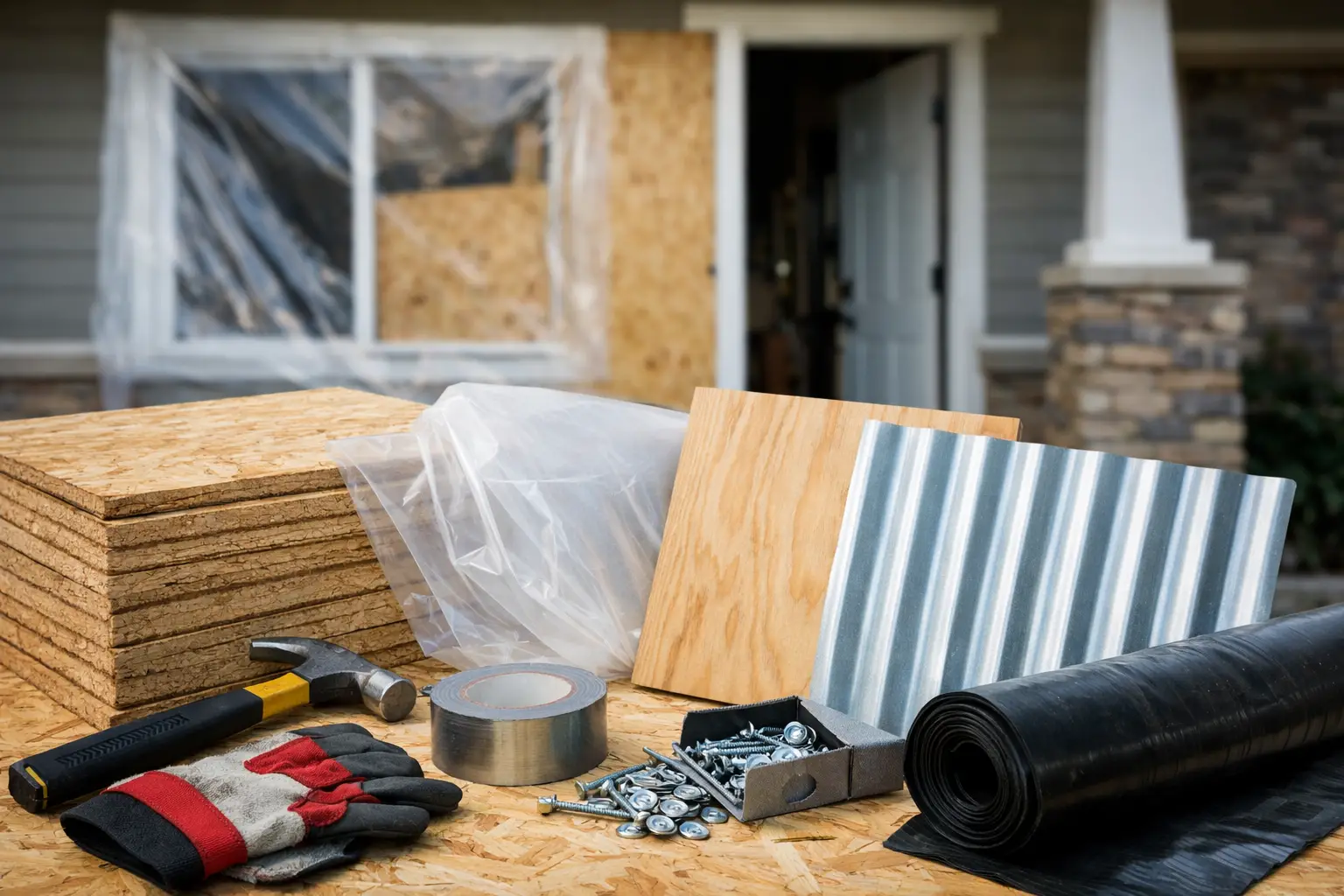
A broken window at 2 a.m. is not the time to guess your way through materials. When glass is on the ground, rain is moving in, or a storefront is left exposed after a break-in, choosing the best emergency board up materials can mean the difference between a secure property and a second problem before sunrise.
In real emergency work, the right board-up material is the one that matches the opening, the risk level, and the conditions on site. A small residential window after a minor impact does not need the same approach as a smashed aluminum storefront door or a large display window facing a busy street. Speed matters, but so does using materials that actually hold up until permanent glass replacement is ready.
What makes the best emergency board up materials
The best materials do three jobs at once. They secure the opening against entry, reduce exposure to weather, and stabilize the area so people are not dealing with loose glass, sharp edges, or a weak temporary patch.
Strength is the first requirement. Thin or damaged panels may look acceptable for an hour, then bow, crack, or pull loose under pressure. Weather resistance comes next, especially when wind or rain is part of the emergency. Finally, the material has to be workable in the field. If it cannot be cut, positioned, and fastened properly under urgent conditions, it is not the right choice no matter how good it looks on paper.
That is why experienced emergency crews usually rely on a short list of proven materials instead of experimenting. In urgent board-up work, reliability beats creativity every time.
Plywood is still the standard
For most emergency board-up situations, exterior-grade plywood remains the most dependable option. It is strong, widely available, easy to size on site, and capable of securing both residential and commercial openings when installed correctly.
Thickness matters. For many standard windows and doors, 1/2-inch plywood may work for short-term protection. For larger openings, ground-level exposure, or high-risk commercial properties, 5/8-inch or 3/4-inch plywood is usually the better choice. The larger the opening, the more important panel rigidity becomes. A thin panel across a wide storefront can flex too much, especially in wind or under impact.
Exterior-grade plywood also performs better than interior-grade material when weather is involved. In an emergency, there is often no guarantee the board-up will only be in place for a few hours. Delays in custom glass fabrication, specialty door hardware, or insurance approvals can stretch temporary protection longer than expected. If moisture is likely, the panel should be able to handle it.
Plywood is not perfect for every case. It is heavier than some alternatives, and large sheets can be awkward to handle around tight storefront entries or upper-story access. But if the question is what works most often, plywood is still at the top of the list.
OSB can work, but it has limits
Oriented strand board, or OSB, is sometimes used as a lower-cost alternative to plywood. It can provide basic coverage and short-term security, especially for lower-risk openings where immediate enclosure is the priority.
The trade-off is durability. OSB tends to absorb moisture more readily, and once it gets wet, edge swelling and weakening become real concerns. In dry conditions and for very short-term use, it may be acceptable. For exposed commercial properties, storm damage, or openings that may stay boarded for several days, it is usually not the best choice.
That matters in Southern California too. Even without constant rain, marine air, overnight moisture, and temperature swings can affect a temporary enclosure. If the opening faces the street, protects valuable inventory, or needs to look more professional while waiting for replacement glass, plywood is generally the safer call.
Polycarbonate has a place in some board-up jobs
When people hear “board-up,” they often think only of wood. But clear polycarbonate panels can be useful in certain emergency situations, especially when visibility matters. Some commercial properties want temporary security without fully blocking light or making the storefront look completely closed.
Polycarbonate is impact-resistant and lighter than glass, which makes it attractive for short-term securing on select openings. It can also help preserve visibility for businesses that need customers to see inside or at least recognize that the location is still being managed.
The downside is cost and application. Polycarbonate is not the default choice for most after-hours emergency calls because it is more expensive than plywood and not always practical for every opening shape, frame condition, or damage pattern. It also needs proper fastening and sizing. A poorly installed clear panel can fail just as easily as a poorly installed wood one.
For specialty commercial jobs, it can be a smart material. For general emergency response, plywood still wins on speed, versatility, and field performance.
Fasteners matter as much as the panel
A strong board with weak attachment is not a secure board-up. Some of the worst temporary jobs fail not because the panel was wrong, but because the fasteners were too short, placed poorly, or installed into damaged framing that could not hold.
Wood screws, lag screws, carriage bolts, and masonry anchors all have their place depending on the opening. A wood-framed residential window calls for a different fastening method than a metal storefront system or a masonry wall around a commercial glass panel. The installer has to know what structure is actually carrying the load.
This is where emergency work separates professionals from improvised fixes. Screwing a sheet into trim, damaged mullions, or weak casing may make it look secured from a distance, but that does not mean it will resist wind, tampering, or repeated movement. The panel and the fastening method need to work together.
The best emergency board up materials depend on the opening
There is no single material that is best for every emergency. The best emergency board up materials depend on what was damaged, how exposed the property is, and how long the temporary protection may need to stay in place.
For a residential broken window, exterior plywood with clean interior and exterior placement may be enough to secure the home and protect against weather until replacement glass is installed. For a shattered patio door, the opening may require thicker material and stronger fastening because the span is wider and foot traffic is more likely.
For storefronts, conditions get more demanding. Large display windows, aluminum door systems, sidelites, and transoms all create different challenges. A busy retail frontage usually needs heavier material, more secure mounting, and cleaner presentation. Business owners are not only protecting the opening. They are protecting inventory, reducing liability, and showing customers and tenants that the property is under control.
If structural damage is involved, or if the frame itself is bent, split, or partially detached, the material choice becomes only part of the job. The entire opening may need stabilization before any board-up panel can perform correctly.
Materials that should not be trusted in a real emergency
Plastic sheeting, cardboard, interior panel scraps, and thin fiberboard are not serious emergency board-up materials. They may block sight for a moment, but they do very little for security, weather protection, or public safety.
Even when someone is trying to act quickly, a weak covering can make the situation worse. Wind tears it loose. Moisture gets in. The property still looks vulnerable. In a commercial setting, that can invite more trouble. In a residential setting, it can leave a family exposed overnight with no real protection.
Tape also has limited value beyond holding loose cracked glass together before removal. It is not a substitute for a board-up. Once the glass is broken through or the frame is compromised, the opening needs a real temporary enclosure.
Why professional emergency board-up gets better results
Good emergency board-up work is not just about carrying plywood in a truck. It is about arriving fast, clearing hazardous glass safely, measuring correctly, choosing the right panel thickness, fastening into stable points, and preparing the opening for permanent replacement.
That last part is often overlooked. A rushed temporary patch can complicate the repair later if the installer damages the frame, misses critical measurements, or leaves the site with hidden instability. An experienced emergency glass contractor treats the board-up as the first step in full restoration, not as a separate task.
That is especially important for commercial properties, where door closers, storefront framing, tempered glass sizing, and custom fabrication all affect the final repair. It also matters for homeowners who want the opening secured now without creating extra cost later.
When the job is urgent, property owners need more than material delivery. They need licensed experts who can take control of the scene, protect the building immediately, and set up the next step the right way.
The safest move after broken glass is not chasing the cheapest panel. It is using the material that fits the opening, the weather, and the risk level, then having it installed correctly so the property is protected until the permanent repair is complete.