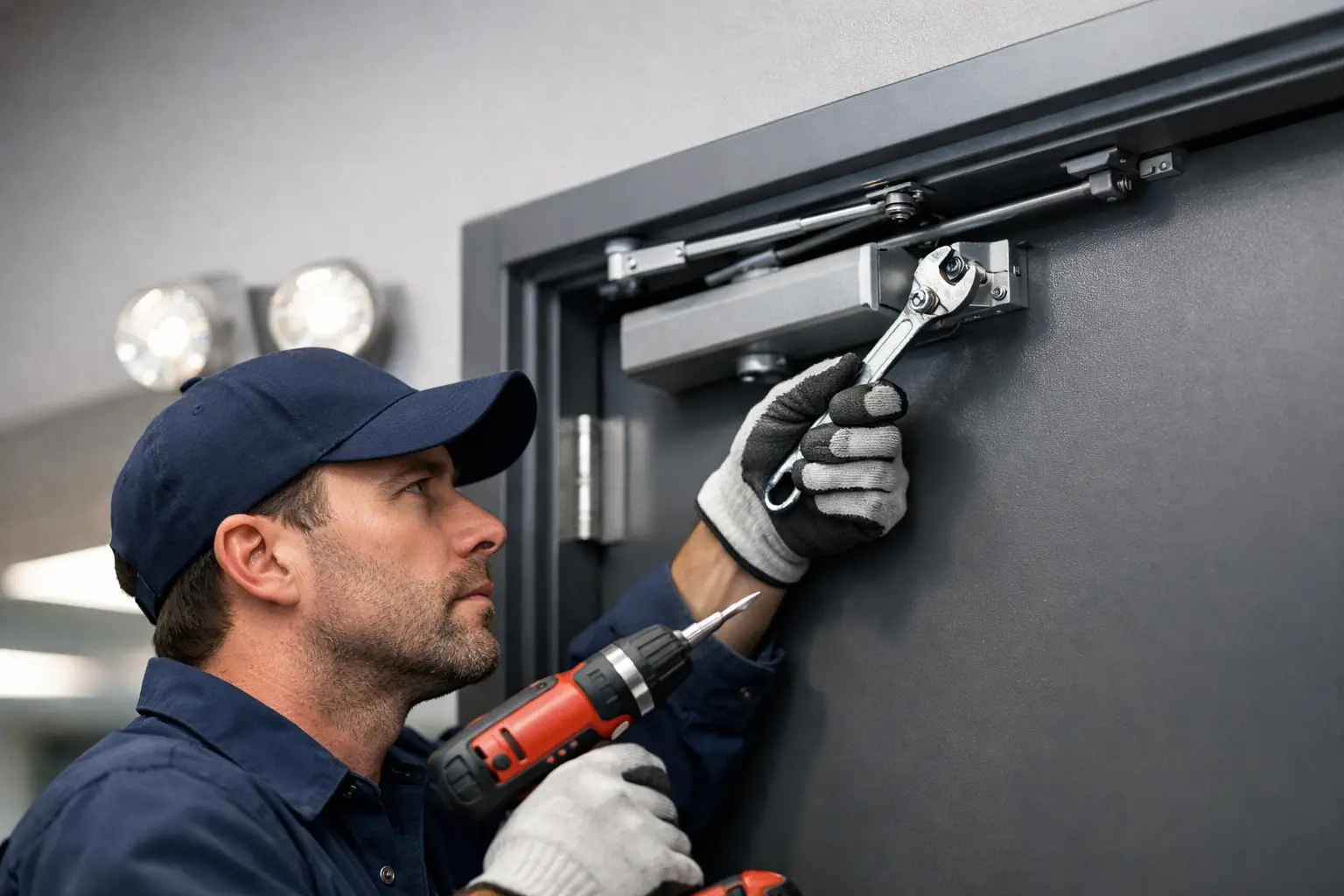
A front door that will not close after a break-in, hard slam, or storefront impact is not a minor hardware issue. It is a security problem, a safety hazard, and for many businesses, a fast path to lost revenue. Emergency door closer repair matters because the closer controls how the door shuts, latches, and protects the opening. When it fails, the whole entry system can become unreliable within minutes.
For property owners and managers, the problem usually shows up fast. The door slams hard. It drifts open and will not latch. It leaks oil. The arm is bent. The frame shifts after an impact. Sometimes the glass survives and the closer does not. Other times, the closer failure comes with broken glass, damaged storefront rails, or a door that cannot be secured at all. In an emergency, you need the opening stabilized first and repaired correctly second.
When emergency door closer repair is truly urgent
Not every closer problem requires a middle-of-the-night response, but plenty do. If a commercial entrance will not stay shut, your building is exposed to theft, trespassing, weather, and liability. If a tenant entry is slamming shut, you may have a life-safety issue. If a glass door has been struck and the closer is pulling the door out of alignment, every additional cycle can make the damage worse.
Storefronts are especially vulnerable. Aluminum and glass door systems depend on alignment. A failing closer can throw off the way the door meets the frame, latch, and threshold. That may look like a simple adjustment problem, but after forced entry or collision, the real issue may be hidden in the top rail, pivot, patch fitting, frame, or glass itself. Quick fixes without inspection often lead to a door that fails again the same day.
Homeowners deal with a different version of the same problem. A closer on a security door, patio access point, or shared building entrance may start dragging, leaking, or refusing to shut after wind damage or impact. If that entry no longer closes and locks the way it should, the property is not secure.
What usually causes door closer failures
A door closer rarely fails for no reason. In emergency situations, the most common causes are impact, forced entry, vandalism, worn internal seals, improper adjustment, and door misalignment. Sometimes the closer body takes the hit. Other times, the arm tears loose from the frame because the mounting surface was weakened or the door was yanked beyond its swing range.
On storefront doors, heavy use is another factor. A closer that has been compensating for hinge wear, bad alignment, or a dragging threshold can fail under stress when traffic is high. That is why a door that seemed manageable yesterday can become unworkable today.
There is also a difference between a closer problem and a door system problem. If the closer is leaking oil but the door and frame are still square, replacement may be straightforward. If the closer failed because the frame shifted, the repair gets more involved. The same goes for entries damaged by break-ins. The closer may be one part of the job, but not the only part that needs immediate attention.
What to do before help arrives
The first priority is safety. Keep people away from any broken glass, loose hardware, or door leaves that are swinging unpredictably. If the entry will not secure, limit access and protect inventory, equipment, and occupants inside. For a business, that may mean closing a damaged entrance and redirecting foot traffic. For a home, it may mean keeping the family away from the opening until the area is stabilized.
Do not force the door open or closed if the frame looks twisted or the glass is cracked. That can turn a repairable problem into a full replacement. Avoid over-tightening adjustment screws if you are not sure what failed. Minor closer tuning is one thing. Emergency tampering on a damaged system is another. A door that slams, sticks, or hangs open after impact needs a proper inspection, not guesswork.
If glass is involved, cleanup and temporary securing should happen right away. That is where an experienced emergency contractor makes the difference. The right response is not just swapping hardware. It is controlling the hazard, securing the opening, checking alignment, and planning the permanent repair based on what actually failed.
Emergency door closer repair for storefronts and commercial buildings
Commercial entries take the most abuse and carry the highest risk when they fail. A door that does not close properly can affect access control, fire separation, HVAC performance, and customer safety. For retail locations, restaurants, offices, and multi-tenant properties, downtime adds up quickly.
In these cases, emergency door closer repair often starts with diagnosing whether the closer can be adjusted, re-mounted, or replaced immediately. If the closer arm is bent or detached, the mounting points may need reinforcement. If the door is sagging, the issue may involve pivots or hinges. If the opening was hit during a break-in attempt, temporary board-up or securing may be necessary before final hardware installation.
This is why experienced glass and door technicians are valuable on urgent calls. They understand the full opening – glass, rails, frame, closer, latch, and alignment – not just one part. That matters when a storefront system must be made safe now and restored to proper operation without patchwork shortcuts.
Why emergency door closer repair is often tied to glass damage
A lot of property owners are surprised by how often closer failures show up alongside broken glass. The reason is simple. When a storefront door is struck, forced, or whipped by wind, the impact travels through the system. The closer, arm, top rail, pivots, and glass all absorb stress differently. One part may fail first, but the others can still be compromised.
That is why emergency response should look at the whole assembly. A damaged closer on a glass entry is not just a hardware issue if the door is also scraping, binding, or failing to meet the lock correctly. In many emergency calls, the urgent work includes securing broken glass, protecting the opening, measuring for replacement materials, and restoring the door closer function so the property can operate safely again.
Repair or replace – it depends on the damage
Some closers can be repaired on site. If the adjustment has drifted, the arm slipped, or the mounting hardware loosened without structural damage, a skilled technician may restore function quickly. But if the closer is leaking hydraulic fluid, the body is cracked, the arm is bent, or the mounting surface is torn out, replacement is usually the right move.
The same judgment applies to the surrounding door system. If the closer failed because of a deeper alignment issue, replacing the closer alone may only buy a little time. A proper emergency repair addresses the immediate failure and the cause behind it. That protects you from repeat service calls and another unsecured night.
For older buildings, part availability can affect timing. Some closers are standard and easy to replace. Others require matching finish, mounting pattern, strength, or door type. In urgent situations, securing the property comes first. Final replacement details can follow once the opening is safe and measured correctly.
What a strong emergency response should include
In a real emergency, speed matters, but so does control. You want a technician who can assess the opening, protect the area, and explain clearly whether the issue is isolated to the closer or part of a larger door and glass failure. That means showing up ready for cleanup, temporary securing, hardware work, and follow-up restoration if needed.
For customers in Ventura County, Los Angeles County, and the San Fernando Valley, the advantage of a local emergency contractor is straightforward. You are not waiting on a distant dispatcher or a generic handyman. You are talking to licensed experts who deal with damaged storefronts, shattered entries, and compromised openings every day. Emergency Glass Repair & Board Up Services handles these calls with the urgency they require, because securing the property is the first job.
If your door closer fails after a break-in, storm, accident, or storefront impact, do not treat it like a routine maintenance item. A door that will not close correctly is telling you the opening is no longer doing its job. Get it stabilized, get it inspected, and get it repaired before a hardware failure turns into a bigger loss.