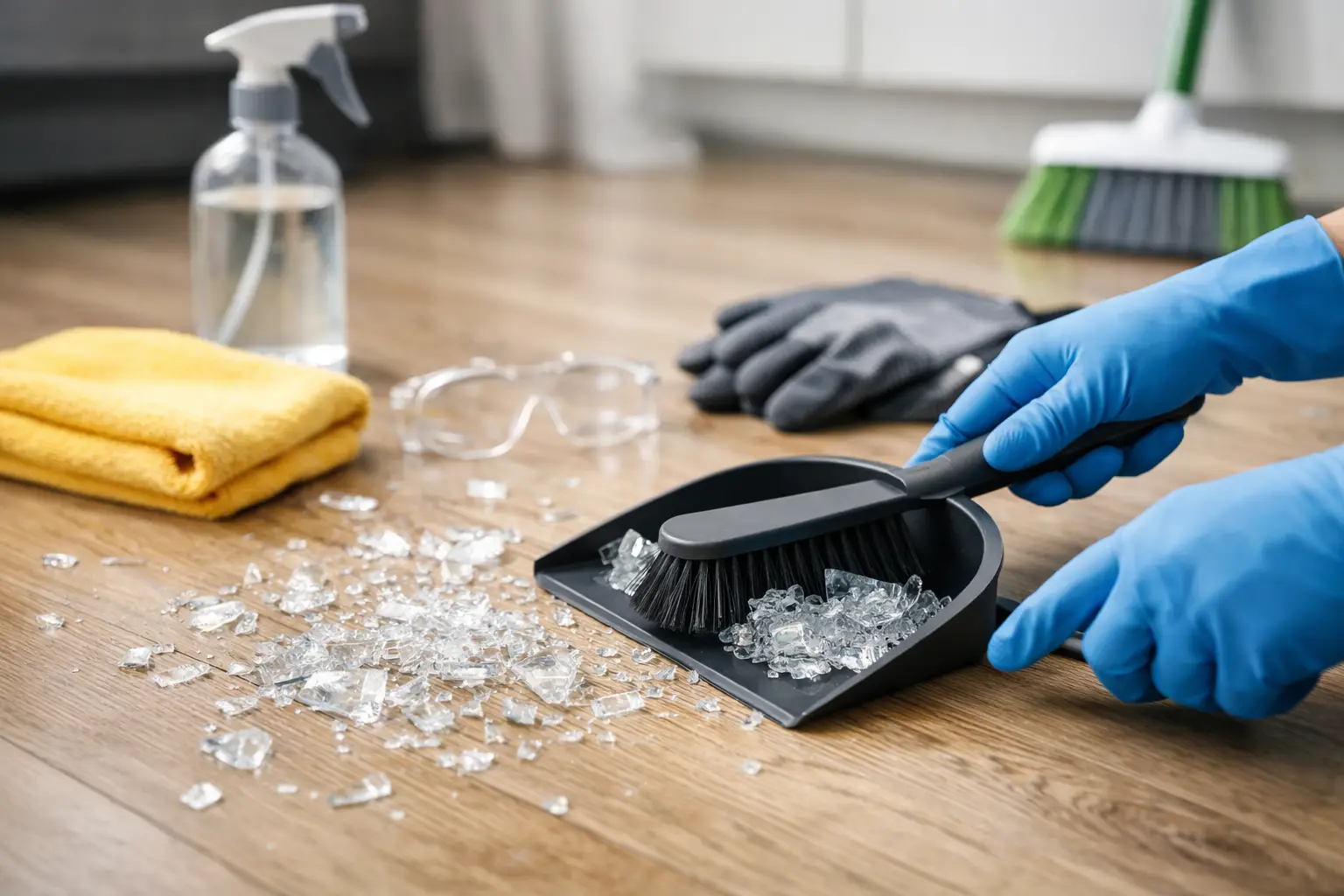
A broken window changes the situation fast. One minute your property is secure, and the next you are dealing with sharp debris, an exposed opening, and a real safety risk. If you need to know how to clean shattered glass, the first priority is not speed – it is control. The goal is to protect people, contain the hazard, and avoid making the damage worse.
For homeowners, that may mean keeping kids and pets out of the room. For storefront operators and property managers, it may mean blocking customer access, protecting staff, and securing merchandise near the break. In either case, shattered glass is not just a mess. It is a cut hazard, a liability issue, and sometimes a sign that your property needs immediate board-up and professional repair.
How to clean shattered glass without getting hurt
Start by clearing the area. Do not walk through the debris any more than necessary, and do not let anyone else do it either. If the glass came from a door, storefront, or large window, assume fragments may have traveled farther than they first appear. Small pieces can scatter under furniture, into rugs, across entryways, and along baseboards.
Before touching anything, put on thick gloves and closed-toe shoes with sturdy soles. If available, wear safety glasses too. Thin kitchen gloves are not enough for this job. You need protection that can handle sharp edges and tiny slivers.
If the broken glass came from a window or door opening, take a moment to look at the frame before you begin cleanup. Loose shards still attached to the frame can drop while you are sweeping. If glass is hanging overhead or cracked panels look unstable, step back. That is a situation for trained glass professionals, especially in commercial buildings or larger residential openings.
Contain the danger first
A clean-up job goes better when the area is controlled. Close off the space with chairs, cones, tape, or whatever barrier you have on hand. In a business setting, keep customers away and redirect foot traffic immediately. In a home, shut the door if possible and keep everyone out until the cleanup is complete.
If weather, theft, or further breakage is a concern, the cleanup may only be part of the problem. A shattered storefront or broken residential window can leave the building vulnerable within minutes. In that case, cleaning the glass is only the first move. Securing the opening matters just as much.
The right way to pick up large pieces
Always begin with the biggest shards. Pick them up carefully by the dullest edge you can manage and place them into a rigid container. A cardboard box, a thick paper bag set inside a trash can, or another sturdy container works better than tossing pieces directly into a loose plastic bag. Thin bags tear easily, and that creates another hazard when someone takes out the trash.
Do not kneel directly on carpet or hard flooring where fragments may be hidden. If you need to get lower to the ground, move slowly and check the area first. It only takes one missed sliver to turn a cleanup into an urgent care visit.
For long splinters or narrow strips, avoid snapping them by force. Broken tempered glass can crumble into many small pieces at once. Laminated or wired glass can also behave differently than standard window glass. The material matters, and some break patterns are less predictable than others.
Sweeping is only step one
Once the larger pieces are removed, sweep the area carefully with a broom and dustpan. Use short, controlled strokes. Fast sweeping can push tiny shards farther out instead of collecting them. Work from the outer edges inward so you are not spreading debris into clean areas.
After the first pass, inspect the floor from different angles. Light reflects off small fragments, so changing your position helps you spot what the broom missed. On tile, concrete, hardwood, and vinyl, this is usually straightforward. On textured flooring, rugs, and mats, it gets harder.
If the glass broke near a threshold, storefront entry, or patio door track, spend extra time there. Glass hides in grooves, corners, and weather stripping. These are the places where people get cut hours later, after everyone assumes the danger is gone.
How to clean shattered glass from carpet and fabric
Carpet is where shattered glass becomes tricky. A broom will pick up some debris, but not the fine pieces buried in the fibers. Start by lifting visible shards by hand with gloves on, then vacuum the area slowly and more than once. Go over the same section from multiple directions.
Even after vacuuming, do not assume the carpet is safe right away. Pressing a wad of damp paper towels or slices of soft bread into the area can help lift tiny slivers the vacuum leaves behind. Either method works because the surface grabs small fragments without pushing them deeper. Dispose of the material immediately in a rigid container.
For upholstered furniture, the safest answer depends on how much glass is involved. A few visible fragments on a flat cushion may be manageable with a vacuum and careful inspection. If a window exploded over a couch, office seating, or fabric inventory, replacement or professional cleaning may be the smarter choice. Tiny slivers in fabric are hard to see and easy to miss.
The small pieces are the ones that cause problems
The most dangerous part of broken glass cleanup is usually not the big shards. It is the nearly invisible pieces left behind on floors, in corners, or along tracks and baseboards. That is why a second and third pass matter.
After sweeping and vacuuming, wipe hard surfaces with a damp paper towel or disposable cloth. Fold it as you go so you are always using a clean section. Do not use a bare hand under any circumstances, even if the area looks clear. When finished, seal the waste and label it if needed so nobody reaches into the container later.
If the break happened in a food service area, retail environment, or tenant space, be stricter than you would be at home. Public-facing properties carry more risk. A missed glass fragment can injure a customer, employee, or vendor and create a bigger problem than the broken window itself.
When not to handle broken glass yourself
There are times when cleanup should stop and a professional should take over. If the opening is large, the frame is damaged, the glass is overhead, or there are still jagged sections lodged in a door or storefront system, it is safer to call for emergency service. The same goes for break-ins, storm damage, vehicle impact, and any situation where property security is compromised.
This is especially true for commercial glass, tempered door systems, insulated units, and larger panels. These are not simple household cleanup jobs. They often require immediate board-up, safe removal from the frame, exact measurement, and a plan for permanent replacement.
For property owners in Ventura County, Los Angeles County, and the San Fernando Valley, speed matters. An unsecured opening invites weather damage, theft, and business interruption. If the broken glass is tied to a forced entry or storefront damage, cleanup alone will not solve the real problem.
What to do after the glass is gone
Once the debris is removed, inspect the surrounding area for secondary damage. Check sills, frames, door closers, tracks, nearby walls, and merchandise or furnishings close to the break. Moisture, impact, or attempted forced entry can leave hidden damage beyond the glass itself.
If the opening cannot be safely closed, covered, or locked, treat it as an active security issue. Temporary materials from a hardware store may help in a mild situation, but they are not the same as a proper emergency board-up done by licensed professionals. A rushed patch can fail overnight, especially in a busy commercial location or during bad weather.
Emergency Glass Repair & Board Up Services handles these situations the way they should be handled – fast, safely, and with direct expert response. That matters when you are not just cleaning up a hazard, but protecting a home, storefront, or occupied property from what happens next.
Broken glass cleanup is one of those jobs where being careful beats being fast. If the damage is minor, a controlled cleanup can solve it. If the break leaves your property exposed or the glass is still unstable, the smartest move is to stop, secure the area, and bring in people who do this every day.