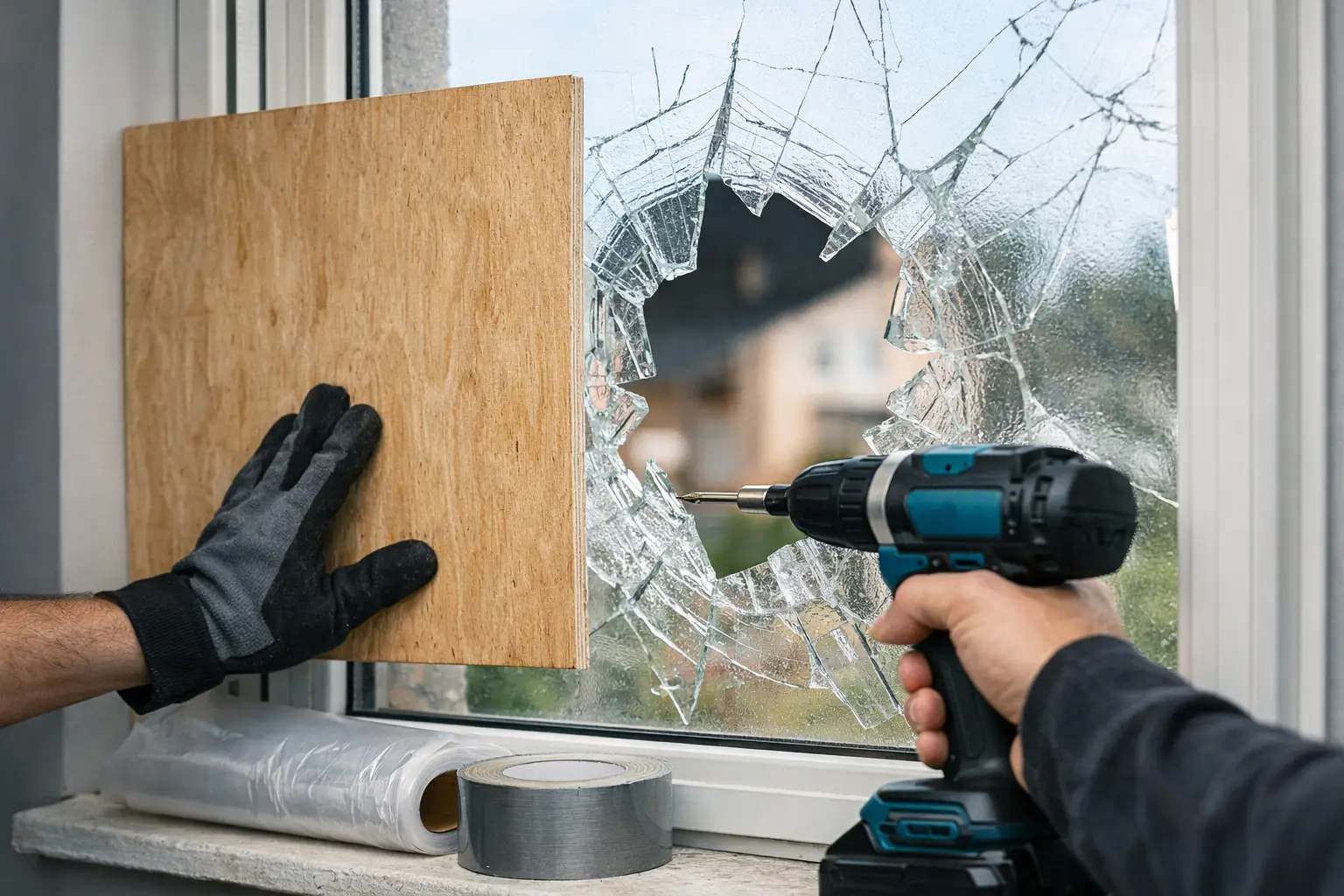
A broken window changes the situation immediately. One minute your property is secure, and the next you are dealing with exposed interiors, sharp glass, weather risk, and the possibility of theft or liability. If you are searching for how to secure broken windows, the priority is simple: protect people first, stabilize the opening, and prevent the damage from spreading.
That response looks a little different for a family home than it does for a storefront or rental property, but the first rule stays the same. Do not treat broken glass like a minor repair if the opening leaves the building vulnerable. A cracked pane can often wait a few hours. A shattered window, damaged frame, or forced-entry opening usually cannot.
How to secure broken windows without making things worse
The biggest mistake people make is rushing straight to the opening with bare hands and whatever materials happen to be nearby. Broken glass creates injury risk fast, and a poorly secured window can fail again in wind, rain, or the next attempted break-in.
Start by clearing people away from the area. Keep children, tenants, employees, and customers back until you know where the glass has landed. Glass does not only fall directly below the frame. It can scatter across floors, sidewalks, landscaping, shelving, and entry paths.
If you can do so safely, put on thick gloves, closed-toe shoes, and eye protection. For larger breakage, long sleeves are worth it. If the window is part of a door, storefront, or any opening that affects access control, lock down the area right away so no one walks through unsecured space.
Next, assess the type of damage. A small crack in a single pane is different from a fully blown-out residential window. A broken patio door, commercial glass entry, or aluminum storefront system often requires more than a temporary cover because the frame, hardware, or surrounding glass may also be compromised. That is where property owners lose time – they focus on the visible glass but miss the structural issue around it.
What to do first after a window breaks
Your first move is not patching. It is making the space safe.
Carefully remove loose glass that is hanging and likely to fall, but only if you can reach it without climbing unsafely or putting your hands near tension points in the frame. If the pane is spidered but still in place, do not start pushing on it. Tape can sometimes help hold cracked glass together short term, but only on minor damage and only as a stabilization step. It is not a real security solution.
Then collect broken pieces from the floor and nearby surfaces. Use a broom and dustpan for larger fragments, and use a vacuum for the smaller shards after the visible debris is gone. In commercial settings, this matters even more because tiny fragments left near entrances create a customer injury risk and a liability problem.
Once the area is clear, protect the opening from weather and entry. If the damage is small and conditions are dry, heavy plastic sheeting may temporarily block air and moisture. If the opening is accessible from outside, plastic alone is not enough. It may keep rain out for an hour or two, but it will not keep people out.
The safest temporary method is board-up
When people ask how to secure broken windows in a real emergency, the most dependable temporary answer is professional board-up. That is especially true after break-ins, storm damage, vandalism, impact damage, or any loss affecting a ground-floor window, sliding door, storefront, or vacant unit.
A proper board-up does more than cover the hole. It stabilizes the opening, reduces exposure to weather, and restores a basic level of security until the replacement glass can be measured, fabricated, and installed. Done right, the board is fitted to the opening and attached in a way that supports the frame rather than causing unnecessary extra damage.
This is where the trade-off matters. A quick DIY cover may seem faster, but if it pulls loose overnight, allows water intrusion, or cracks the frame further, the final repair gets more expensive. In residential settings, that can mean interior water damage, insulation problems, or a higher risk of another entry attempt. In commercial settings, it can mean downtime, inventory exposure, and a poor public-facing appearance.
Materials that help and materials that do not
Plywood is the standard temporary security material because it provides real resistance and coverage. Heavy plastic can help behind or under a board-up for weather protection, but by itself it is mostly a short-term barrier against debris and moisture. Cardboard, blankets, and trash bags are not serious solutions. They may hide the opening, but they do not secure it.
Duct tape also gets overused. It has limited value on minor cracks and for holding plastic in place temporarily inside a protected area. It does not make broken glass safe, and it does not secure an open window against forced entry or bad weather.
For higher-risk situations, such as a broken storefront, side glass near a door, or a rental unit between occupants, the right materials and installation method matter more than the material alone. If the board is loose, undersized, or fastened poorly, it creates a false sense of security.
Residential and commercial broken windows are not the same job
Homeowners often need immediate protection from weather, pets escaping, or family safety hazards. Property managers and landlords usually also have to think about tenant safety, vacant unit exposure, and documentation for insurance. Storefront owners have another layer of urgency because the damaged opening affects public access, inventory protection, and business operations.
That means the answer to how to secure broken windows depends on the property type. A second-story bedroom window with a crack may be stabilized and scheduled for repair. A smashed front window at a retail location needs immediate board-up and cleanup. A shattered patio door in an occupied home needs both because the opening is large, low, and easy to access.
The frame also matters. Wood, vinyl, aluminum, and commercial storefront systems all behave differently after impact. In some cases the glass is not the only damaged component. If the frame is twisted, the glazing fails around adjacent panels, or the hardware is bent, securing only the visible break will not solve the real problem.
When to call a professional right away
You should bring in a licensed emergency glass contractor immediately if the opening is large, street-facing, easy to access, or part of a door or storefront system. The same goes for any break involving tempered glass doors, insulated units, commercial entries, multi-panel systems, or repeated break-in risk.
Professional response is also the smart move when you need more than a temporary patch. An experienced crew can clean hazardous debris, secure the property properly, take exact measurements, and set up the permanent repair without wasting time. That is the difference between controlling the damage and letting it drag into a bigger problem.
For owners and managers in Ventura County, Los Angeles County, and the San Fernando Valley, speed matters because weather, foot traffic, and crime exposure do not wait. Emergency Glass Repair & Board Up Services handles that first-response phase the way it should be handled – with cleanup, securing, and a plan for replacement instead of a stopgap that leaves you exposed.
After the board-up, what comes next
Temporary security is only step one. The next step is confirming the full extent of the damage and getting the correct replacement glass and related components ordered. That might be a basic residential pane, but it could also involve insulated glass, tempered safety glass, laminated glass, storefront glass, custom sizing, or matching existing commercial systems.
This is another place where shortcuts create delays. If measurements are off or the wrong glass type is ordered, the property stays boarded longer than necessary. For businesses, that affects appearance and operations. For homeowners, it affects comfort, energy efficiency, and peace of mind.
If insurance is involved, document the damage early with photos and basic notes about the cause and time of loss. Do that after the area is safe, not before. Security and cleanup come first.
A broken window is never just broken glass. It is a security problem, a safety hazard, and sometimes the start of larger property damage. The right response is fast, controlled, and practical: protect people, secure the opening, and move quickly toward proper repair so your building is not left vulnerable any longer than necessary.