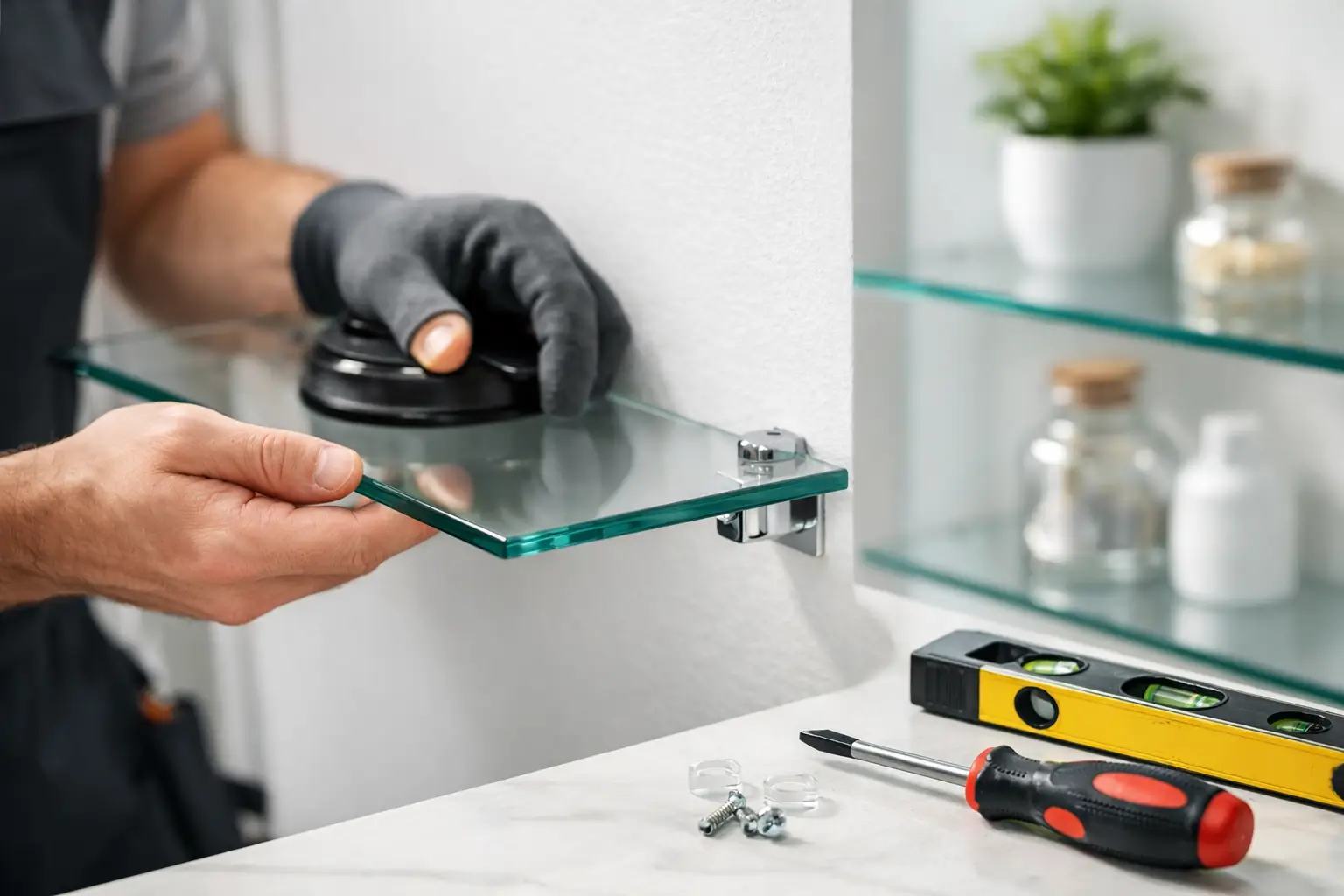
A glass shelf looks simple until it fails. Then it becomes a safety problem, a property damage problem, and in a business, a liability problem. That is why glass shelves installation should never be treated like a quick add-on. Whether you are upgrading a retail display, finishing a bathroom niche, or adding shelving to a lobby, office, or kitchen, the real job is not just making it look clean. The real job is making sure it stays secure under daily use.
For property owners and managers, that distinction matters. A shelf that is slightly off level, poorly anchored, or undersized for the load can crack without much warning. In a storefront or commercial setting, that risk goes beyond appearance. It affects customer safety, product display, and your ability to keep the space looking professional.
Why glass shelves installation takes precision
Glass shelves do not forgive sloppy work. Unlike wood, glass cannot be shaved down on site if a measurement is off. Unlike wire shelving, it does not flex much before failure. Every part of the opening, the bracket placement, the wall condition, and the expected load has to be considered before the glass is cut and installed.
That starts with measurement. Width, depth, and thickness all need to match the application. A short decorative shelf in a powder room is a different job than a long retail shelf holding products all day. The wrong thickness can create stress on the panel. The wrong depth can push too much weight away from the wall. Even small mistakes become expensive once custom glass has been fabricated.
The wall matters just as much as the glass. Drywall, tile, masonry, metal studs, and wood backing all require different anchoring methods. If the support hardware is strong but the wall is weak, the whole system is weak. Good installation is never just about the shelf itself. It is about the structure behind it.
Choosing the right glass for the job
Not all glass shelving is the same, and this is where many property owners get bad advice. Tempered glass is the standard choice for most shelves because it is built for safety. If it breaks, it shatters into small pieces rather than dangerous sharp shards. In homes, that matters in bathrooms, kitchens, and living spaces. In commercial properties, it is even more important where customers or employees are nearby.
Edge finish also matters more than people think. A polished edge gives the shelf a clean, finished look, but it also makes the exposed edge safer and more durable. In visible applications like salon displays, office reception areas, and retail merchandising, this detail affects the final result more than the bracket style alone.
Tint, low-iron clarity, and frosted finishes can all work, but they should match the purpose of the space. Clear glass is common because it keeps the room open and does not compete with products or decor. Frosted glass can hide fingerprints better. Low-iron glass gives a cleaner, less green appearance, which is often preferred in upscale residential and commercial interiors. The trade-off is price. Better visual clarity usually costs more.
Where glass shelves work best
Glass shelves are popular because they add storage without making a room feel heavy. In a bathroom, they keep toiletries accessible without crowding a small footprint. In a kitchen, they can open up a wall that would feel closed in with solid cabinetry. In a retail store, they help products stand out. In an office, they can display awards, literature, or decor without making the space feel cluttered.
Still, the best location depends on use. High-traffic areas need stronger planning. Shelves installed near doors, in busy corridors, or inside active commercial spaces are more likely to be bumped, loaded unevenly, or cleaned aggressively. That does not mean glass is a bad choice. It means the design and hardware need to fit the reality of the space.
This is especially true for landlords and property managers preparing units or common areas. A shelf that looks great for a showing still has to hold up after move-in. Attractive is not enough. It has to be durable and safe under normal use.
The hardware is not a minor detail
A lot of installation problems come from treating brackets and clips like an afterthought. They are not. The hardware determines how the weight is distributed, how secure the shelf remains over time, and how forgiving the system is if someone places a heavy object in the wrong spot.
Simple clip systems can work well for light-duty decorative shelves. Heavier shelves or longer spans usually need stronger brackets, concealed supports, or channel systems that spread the load more evenly. The right answer depends on the wall material, the shelf dimensions, and what the shelf is expected to carry.
There is also the issue of spacing. Brackets that are too far apart can create stress points in the middle of the glass. Brackets that are not perfectly level can twist the panel and increase the chance of cracking. This is one of those jobs where being off by a little is still being off too much.
Common mistakes that lead to broken shelves
The most common failure in glass shelves installation is poor anchoring. Installers sometimes hit drywall only, use the wrong fasteners, or assume tile means strength when the backing behind it is inadequate. A shelf may seem stable at first, then loosen gradually until it fails.
Another common mistake is choosing glass that is too thin. People often focus on cost or appearance and underestimate the actual load. Decorative items, product inventory, folded towels, and bathroom supplies add up fast. Once a shelf is overloaded, the stress may not show right away. That delayed failure is what makes glass work risky when installed carelessly.
Improper handling during installation is another issue. Tempered glass is durable in use, but its corners and edges can still be vulnerable during transport and placement. One bad hit against tile, metal, or concrete can ruin the panel before it ever supports a single item.
Then there is the rushed install. In emergency repair work, we see the aftermath of jobs that were done fast instead of done right. The same lesson applies here. Shelving should be measured, mounted, checked for level, and tested before the space is turned back over for normal use.
Residential and commercial jobs are not the same
A homeowner adding one bathroom shelf has different needs than a store owner outfitting a display wall. Residential work is often about appearance, moisture resistance, and everyday convenience. Commercial work adds code concerns, public safety, traffic patterns, and heavier use.
For storefronts, salons, medical offices, and leased commercial spaces, professional installation is the safer call. If a shelf comes down in front of customers, the damage is rarely limited to the glass. It can affect merchandise, flooring, adjacent fixtures, and your business image. For property managers, a poor installation can create tenant complaints and exposure you do not need.
That is why experienced installers look at the full setting, not just the shelf opening. They ask what will sit on it, who will use it, what the wall is made of, and what happens if someone leans on it, bumps it, or loads it unevenly.
When to call a professional for glass shelves installation
If the shelf is custom-cut, installed in tile or stone, mounted in a commercial space, or intended to hold meaningful weight, professional installation is the smart move. The cost of replacing broken glass, patching walls, or dealing with an injury claim is far higher than getting it installed correctly from the start.
This also applies when the area has existing damage. A chipped tile wall, water-damaged backing, cracked grout line, or unstable framing can all affect the install. In those cases, the problem is not just shelving. The surface itself may need repair before any glass goes up.
For owners who already deal with urgent glass issues, working with a contractor who understands both installation and breakage prevention makes a difference. Emergency Glass Repair & Board Up Services handles glass with that mindset every day – secure the property, remove hazards, measure correctly, and restore the space so it is safe and presentable again.
Glass shelves can make a space look sharp, open, and modern. But the clean finished look only lasts when the shelf is measured right, supported right, and installed by people who do not guess. If you want shelving that holds up in real life, treat the install like the safety job it is.