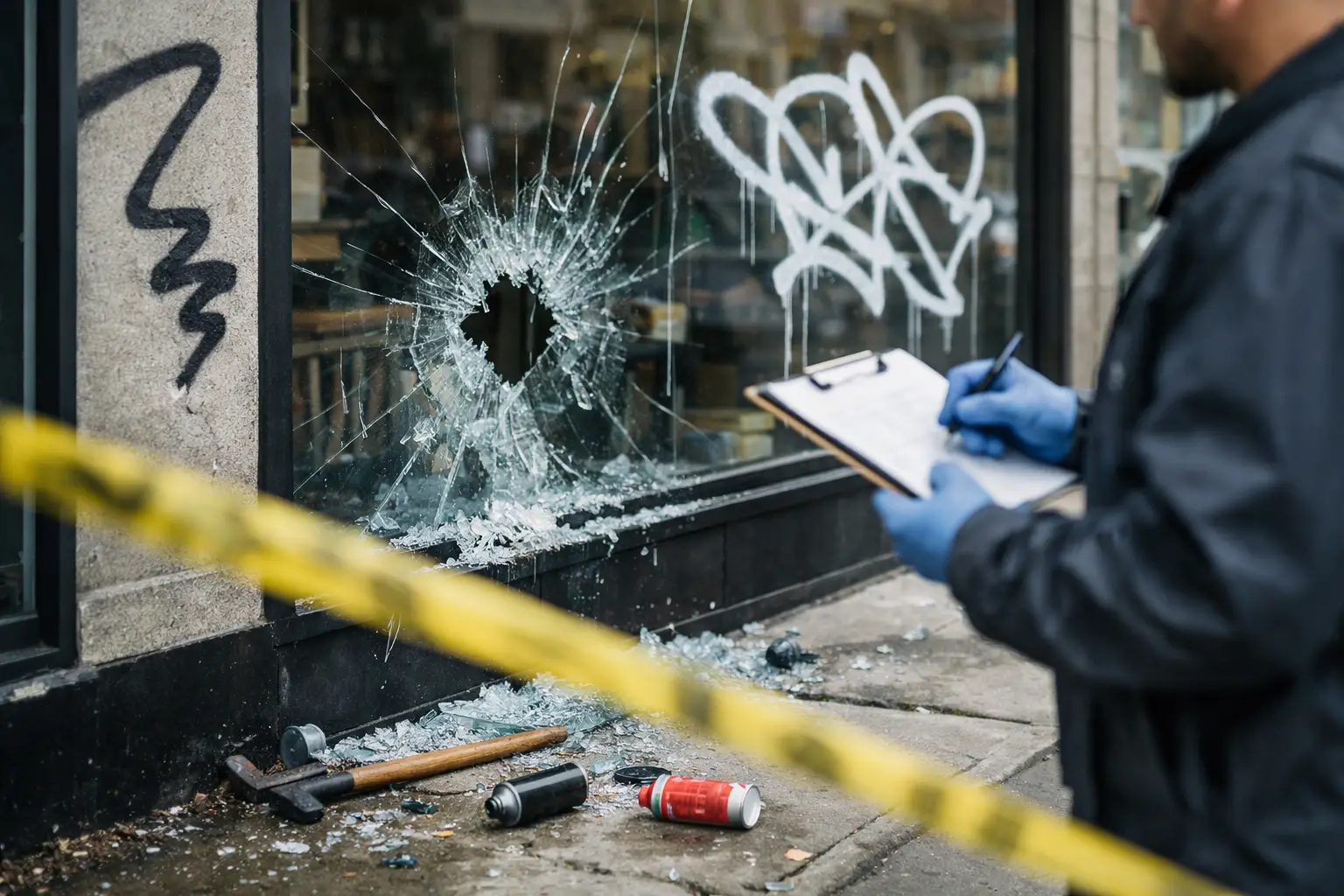
The worst part of storefront vandalism is not always the broken glass. It is the next hour – when your entrance is exposed, your staff is shaken up, your inventory may be vulnerable, and customers are starting to notice. If you are searching for what to do after storefront vandalism, the priority is simple: secure the property fast, protect people from injury, and get the damage documented correctly so repairs can move without delay.
A vandalized storefront can range from graffiti and cracked glass to a smashed entry system after an attempted break-in. Some incidents look minor at first and turn into bigger problems by morning, especially if there is loose tempered glass, a damaged frame, or a door that no longer locks. The right response in the first few hours can limit liability, reduce theft risk, and get your business back to normal faster.
What to do after storefront vandalism in the first hour
Start with safety. Keep employees, tenants, and customers away from the damaged area. If the storefront glass is shattered or hanging in place, do not let anyone walk through the entrance until it has been inspected and secured. Broken commercial glass can spread farther than it appears, and small fragments around the threshold can create immediate injury risks.
If there is any sign of forced entry, call law enforcement first. That matters not just for public safety, but for documentation. A police report can support your insurance claim and create a clear record of the incident. If merchandise is missing or the interior was disturbed, preserve the scene as much as possible until officers have advised you on next steps.
Once the immediate safety issue is under control, call an emergency board-up and glass repair contractor. This is where speed matters. A storefront that stays open to the street invites more damage, weather exposure, trespassing, and after-hours theft. Temporary board-up service is often the fastest way to stabilize the opening while measurements are taken for replacement glass or door components.
Do not try to tape over a shattered storefront or lean plywood into place as a quick fix. Improvised solutions can fail, create more hazards, and make the opening less secure. A licensed emergency crew can remove dangerous glass, board up the storefront properly, and check whether the frame, closer, lock, or surrounding system was also damaged.
Secure the opening before you think about appearance
Business owners often worry about how the storefront looks to customers, and that is understandable. But appearance comes after security. A cracked pane may still be standing, yet no longer safe. A bent aluminum frame may prevent a proper lockup even if the glass damage seems limited. In other words, what looks cosmetic can actually be structural.
A professional response usually begins with site protection and cleanup. That means clearing broken glass from the sidewalk and interior entry area, securing the damaged opening, and assessing whether the existing glass can be replaced directly or whether additional parts need to be ordered. In many vandalism cases, the permanent fix is not just new glass. It may also involve door hardware, framing alignment, panic hardware, or custom tempered glass fabrication.
If your store is part of a retail center or managed property, notify the property manager right away. Some leases require immediate reporting of exterior damage. They may also need to coordinate with center security, neighboring tenants, or maintenance access.
Document everything before cleanup goes too far
After the site is safe, document the damage thoroughly. Take clear photos of the storefront from multiple angles, including close-ups of broken glass, damage to doors or frames, sidewalk debris, and any signs of forced entry. If the vandalism included graffiti, capture wide shots that show its placement and closer images that show detail.
Save security camera footage as soon as possible. Do not assume your system will store it indefinitely. If nearby businesses have exterior cameras facing your storefront, ask them to preserve footage too. Time matters here because many systems overwrite recordings quickly.
Write down what happened while it is still fresh. Include the time the damage was discovered, who found it, whether police responded, and what parts of the property were affected. If employees were present, ask for short written statements. These details can help if your insurance carrier asks follow-up questions later.
Keep receipts and records from the emergency service call, board-up work, glass cleanup, and any temporary security measures. That paper trail helps connect the incident to the repair costs.
Insurance claims move better when the site is stabilized
Many owners hesitate to call for emergency service until they speak with insurance. That can be a mistake. In most cases, the carrier expects you to take reasonable steps to prevent additional damage. Leaving a storefront exposed overnight can worsen your loss and complicate the claim.
The practical approach is to secure first, document carefully, and notify your insurance company as soon as possible. Be ready with photos, the police report number if available, and invoices for emergency board-up or cleanup. Ask your carrier what they need for the permanent repair phase, especially if the storefront uses custom glass, specialty doors, or branded elements.
It also helps to know that not every vandalism repair is handled the same way. Some policies treat broken glass separately from theft or property damage. Deductibles and coverage details vary. That is why clean documentation and a clear scope of work matter.
What to do after storefront vandalism if your business is still open
Some businesses can keep operating after storefront vandalism, but it depends on the damage. If the main entrance is compromised, foot traffic, code compliance, and customer safety all come into play. A side entrance may work temporarily, but only if it is safe, accessible, and permitted under your building setup.
Be realistic about the condition of the space. If glass debris has spread into customer areas, if HVAC exposure becomes an issue, or if the storefront can no longer lock properly, a partial closure may be the safer choice. A short interruption is often better than risking injury, theft, or a second emergency.
If you stay open, communicate clearly. Post temporary entry instructions, block off unsafe sections, and make sure your team understands where customers should and should not go. Good temporary protection should let you maintain some level of business continuity while the replacement is being prepared.
Permanent repair is not the same as a quick patch
Once the opening is secured, the next step is a proper repair plan. That starts with accurate measurement and identification of the original system. Commercial storefront glass is not one-size-fits-all. Thickness, tint, safety rating, door configuration, and frame condition all affect what can be installed.
This is where experience matters. A rushed replacement that ignores frame damage or hardware alignment can lead to recurring door issues, poor sealing, and added costs later. If the storefront was hit hard enough to shift the frame, simply replacing the pane may not solve the real problem.
An experienced emergency glass contractor should be able to handle both stages – immediate board-up and the finished restoration. That saves time and avoids the handoff problems that happen when one company secures the site and another tries to figure out the repair later.
For owners in Ventura County, Los Angeles County, and the San Fernando Valley, fast local response is especially important after vandalism because many businesses cannot afford to leave a street-facing opening exposed for long. Companies like Emergency Glass Repair & Board Up Services are built for that type of urgent call, where cleanup, securing, and follow-up replacement all need to happen in sequence and without confusion.
Prevent the next incident without overreacting
After a vandalism event, most owners want to make immediate changes. That makes sense, but the right fix depends on what actually happened. If the issue was random graffiti, your response may be different than if someone targeted the lock, smashed a door rail, or tried to get to high-value merchandise.
A few upgrades often make a real difference: better exterior lighting, improved camera positioning, stronger locking hardware, security film in some applications, and faster after-hours response procedures for staff or property managers. But there is always a balance. Not every storefront needs the same level of hardening, and some visible security changes can affect customer experience or design.
The best next step is usually a practical one. Ask the repair professional whether the damage revealed a weak point in the system. Sometimes the lesson is about glass type. Sometimes it is the door hardware. Sometimes it is simply that your emergency contact chain needs to be tighter.
When a storefront is damaged, the clock starts immediately. The businesses that recover fastest are usually the ones that act without hesitation – protect people first, secure the opening, document the loss, and move straight into a proper repair. A broken storefront is a disruption, but it does not have to become a longer shutdown if the response is fast, skilled, and under control from the first call.