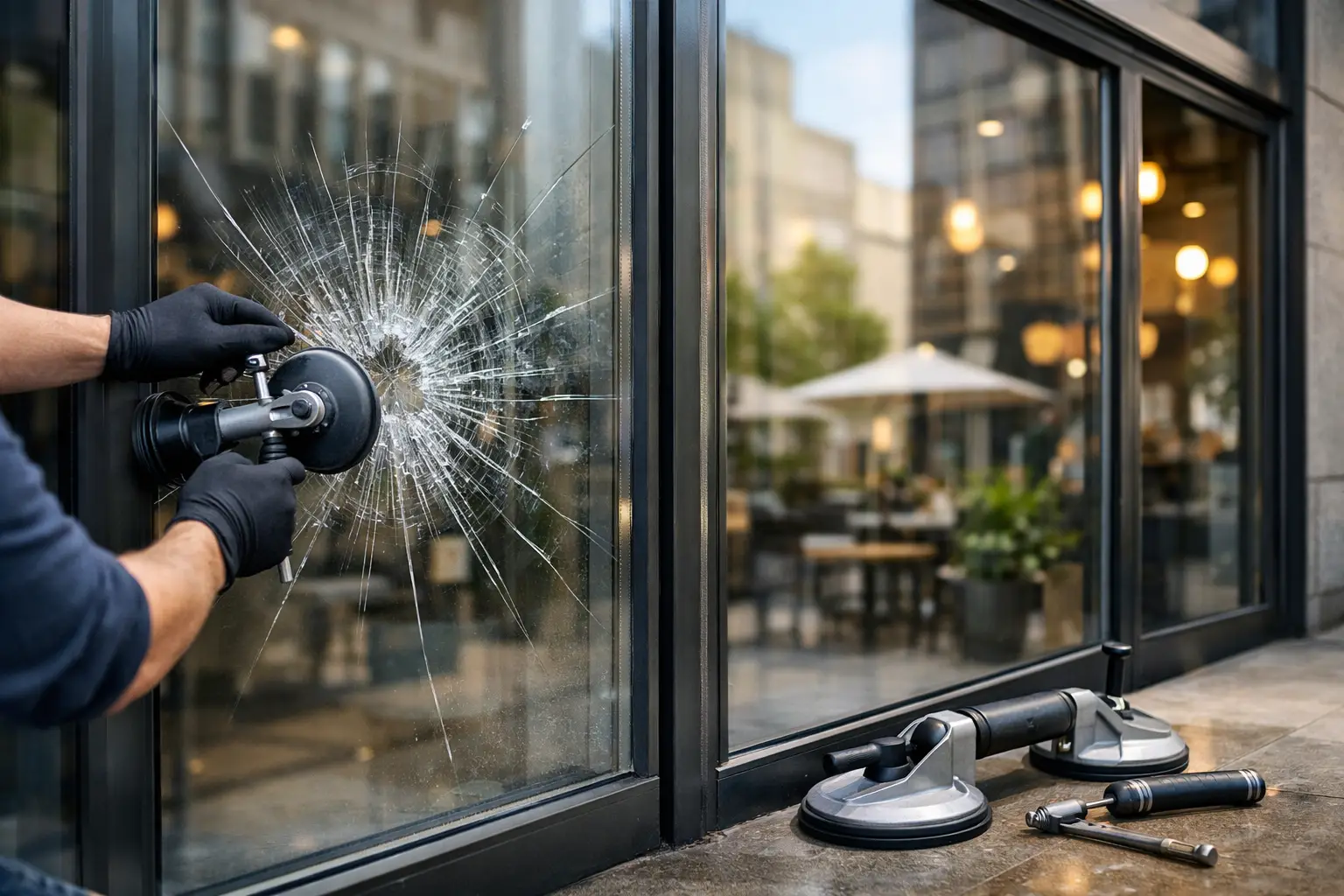
A cracked storefront panel at 7:15 a.m. is not a small problem. It can stop customers at the door, expose inventory, create a liability hazard, and leave you deciding fast between a repair, a full replacement, or an emergency board-up. That is why storefront glass repair examples are useful – they show what real damage looks like, what can be stabilized, and when immediate action protects your business from a much bigger loss.
For store owners, property managers, and landlords, the real question is rarely just, “Can the glass be fixed?” The real question is, “How do I secure this property right now, reduce downtime, and get the front of the building back to a safe, professional condition?” The answer depends on the type of glass, the extent of the damage, the frame condition, and whether the opening can safely stay in service.
Storefront glass repair examples in real situations
One common example is a single-pane tempered storefront door lite that shatters after a customer pushes a cart into it. In that case, there is usually no repair to the glass itself. Tempered glass breaks into many small pieces, so the immediate job is cleanup, securing the opening, checking the door hardware and frame, and measuring for replacement glass. If the business needs to stay open, a fast board-up may be the right temporary move until the new panel is ready.
Another example is a large fixed storefront window that develops a spreading crack after impact from a thrown object or attempted break-in. Sometimes owners hope the crack can be stopped and the panel kept in place for a while. That depends on the glass type and the crack pattern. In most commercial storefront settings, a crack across a large viewing pane is a security risk and a visual problem. Even if the glass is still standing, replacement is often the safer and more professional choice.
A third example is damage around the edges rather than the center. We see this after frame movement, poor installation, or repeated door slamming. Chips, stress cracks, and corner fractures can start small but spread fast. These cases matter because the glass may fail later, not at the moment the damage appears. Waiting can turn a controlled service call into a late-night emergency.
Then there are insulated glass units in modern storefront systems. If the glass is fogging, showing condensation between panes, or losing clarity after seal failure, this is not the same as a break-in emergency, but it still affects appearance and energy performance. In some cases, the unit can stay in place temporarily. In others, especially where visibility and presentation matter, replacement should be scheduled quickly.
What these examples tell you about repair vs. replacement
The word repair can mean different things on a storefront job. Sometimes it refers to stabilizing the opening, removing dangerous glass, securing the site, and restoring hardware or framing so the replacement glass can be installed correctly. Sometimes it means a true fix to the surrounding system, such as adjusting a misaligned aluminum storefront frame, resetting glazing, replacing weather seals, or correcting door closure issues that contributed to the damage.
But when the glass itself is shattered, deeply cracked, or structurally compromised, replacement is usually the real solution. That is especially true for tempered safety glass and many insulated units. A lot of owners lose time trying to force a repair where one is not practical. In an emergency, that delay can leave the property exposed to theft, weather, and injury claims.
The better approach is to treat the issue in stages. First, secure the opening. Second, remove hazards and assess the surrounding system. Third, measure precisely for the right glass and finish the permanent restoration. That process protects the property without guessing.
Examples where emergency board-up is the smart first step
Not every storefront can be reglazed on the spot. Glass type, size, tint, thickness, safety code requirements, and custom fabrication all affect timing. If a large panel is broken overnight or during business hours, board-up service is often the most responsible first response.
A jewelry store after a smash-and-grab is a clear example. The priority is not cosmetic appearance in the first hour. The priority is securing the opening, protecting merchandise, and preventing another entry point. The same goes for restaurants, retail shops, and office lobbies hit by vandalism or vehicle impact.
Storm damage creates another common scenario. Windborne debris can crack one panel and loosen another. Even if only one lite is visibly broken, the surrounding glass may have shifted under pressure. In that case, a rushed same-day install is not always the best move if the frame needs inspection or the exact replacement glass is not available. A proper board-up buys time for a safer permanent repair.
Storefront door repair examples that affect the glass
Glass problems are not always just glass problems. A storefront door that drags, slams, or fails to close square can stress the lite inside it. We often see broken door glass paired with bad pivots, worn closers, damaged rails, or misaligned locks. Replacing only the glass without correcting the door problem can lead to another break.
Consider a busy retail entrance where the aluminum door is slightly twisted after years of use. The glass may crack at the corner because the frame pressure is uneven. Or after a forced entry, the lock area may be bent and the glass shaken loose. In both examples, the repair has to address the full door system. Otherwise the storefront stays vulnerable.
This is one reason experienced emergency crews matter. You need someone who can look beyond the shattered pane and tell you whether the framing, hardware, and security of the entrance have also been compromised.
Why the cause of damage changes the repair plan
A break-in, an accident, and weather damage do not get treated the same way. Break-in damage raises immediate security concerns. The contractor needs to secure the property, clear the area, check neighboring glass, and look for frame or lock damage. Vehicle impact may involve structural movement, bent metal, and unsafe anchoring conditions. Storm damage may require checking for water intrusion, pressure damage, and multiple weak points across the storefront line.
That is where real storefront glass repair examples help. They show that the visible crack is only part of the story. The best repair plan comes from understanding what caused the failure and what else may have been affected.
What business owners should do before help arrives
If the glass is broken, keep customers and staff away from the area and do not try to handle large loose pieces yourself. If possible, isolate the entrance and protect the interior from foot traffic. Take a few clear photos for documentation, but do not waste time trying to tape over serious damage or create your own patch.
If the opening is exposed after hours, call for emergency service immediately. Fast response matters because every extra hour increases the chance of theft, weather exposure, and additional damage. A professional crew can clean up hazardous glass, secure the opening, and start the replacement process without turning the site into a bigger risk.
What a proper storefront repair process should look like
A strong response starts with control. The site is assessed, dangerous glass is removed, and the property is secured. From there, the contractor confirms glass type, thickness, tint, safety requirements, and frame condition. Measurements have to be exact. If the opening was damaged by impact or forced entry, the door and framing should be checked before any final glass is installed.
For local owners in Ventura County, Los Angeles County, and the San Fernando Valley, speed matters, but so does getting the job done right the first time. Emergency Glass Repair & Board Up Services is built around that reality – secure first, clean up safely, measure accurately, and restore the storefront so it looks and performs like it should.
The biggest takeaway from these storefront glass repair examples is simple: do not judge the job by the crack alone. Judge it by the risk to your property, the condition of the full storefront system, and how fast you can get the opening secured by people who know what they are doing. When the front of your building is damaged, the right first move protects everything behind it.